
Most greenhouse operations lose yield not from bad luck, but from avoidable management gaps. The global commercial greenhouse market reached USD $41.3 billion in 2025, yet only 30% of operations currently meet satisfactory management standards. Getting the fundamentals right separates profitable growers from struggling ones.
Introduction
Greenhouse crop management is one of the most skill-intensive disciplines in modern horticulture. It demands precise control over environment, inputs, timing and biology, all within a structure that amplifies both successes and failures.
Professional growers who follow proven practices consistently outperform those who rely on intuition alone. The gap between top-performing operations and average ones is measurable in yield, resource efficiency and profitability.
The top 7 best practices for greenhouse crop management covered here reflect current horticultural science and real-world grower experience. Understanding where most operations fall short is the first step toward building a more productive, resilient greenhouse.
What Greenhouse Crop Management Actually Means
Greenhouse crop management is the strategic oversight of plant growth within controlled environments, covering temperature, humidity, light, pest control and growing media selection to enhance productivity and ensure consistent yields. Applied together, these practices give growers the tools to maintain quality and output regardless of external seasonal conditions.
UMass Extension defines Best Management Practices as “an industry-driven effort to maintain agricultural production in a profitable, environmentally-sensitive, and sustainable manner.” That definition captures the balance every professional grower must strike.
Key elements of effective greenhouse crop management include:
- Environmental control: Managing temperature, humidity, CO2 and light to match crop needs
- Growing media selection: Choosing substrates that support root health, drainage and nutrient availability
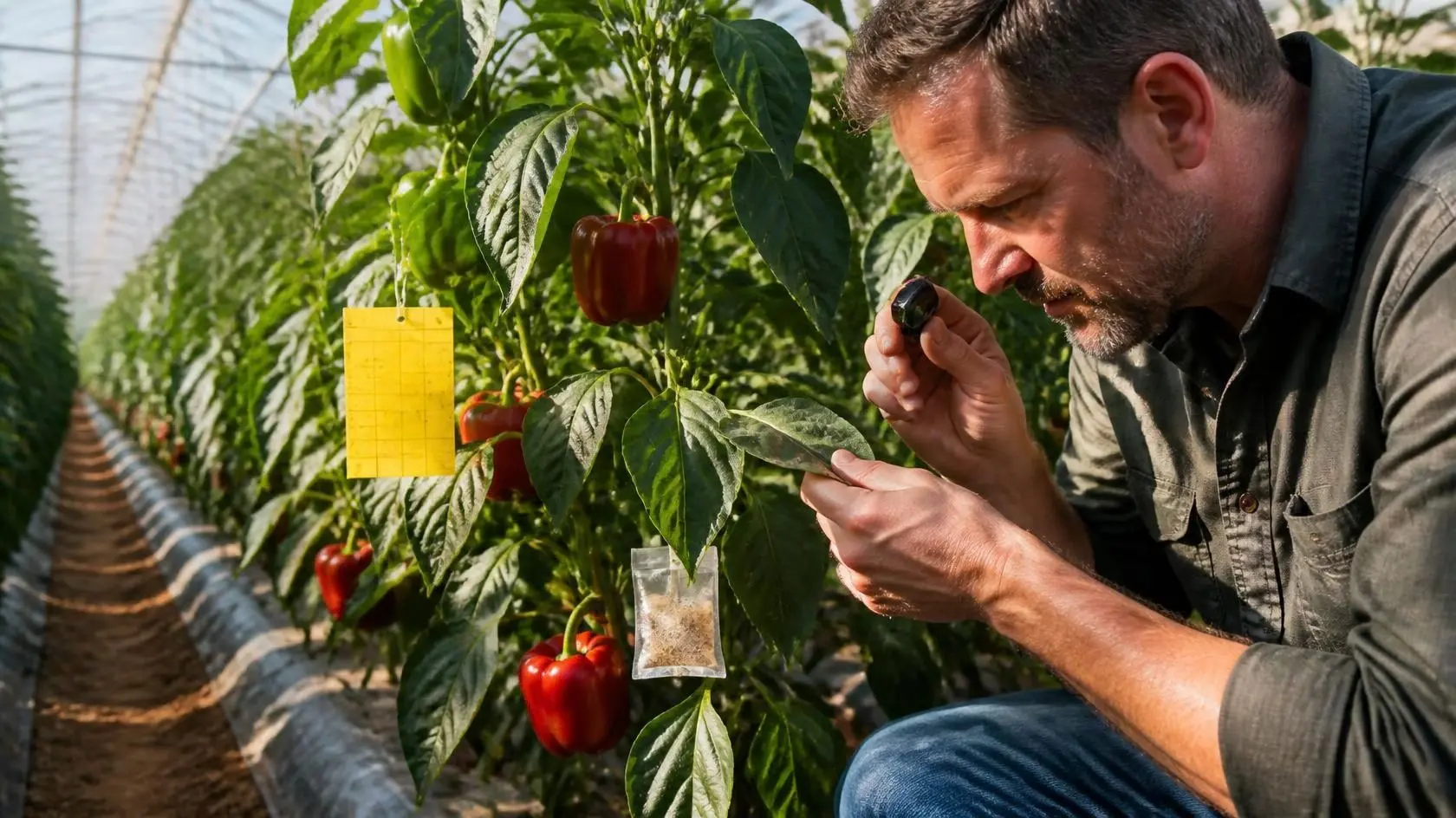
- Pest and disease prevention: Proactive monitoring and biological or chemical intervention
- Crop scheduling: Planning planting and harvest cycles to maximize throughput
- Sanitation protocols: Maintaining clean facilities to prevent pathogen buildup
Practice 1: Choose the Right Plants for Each Season
Matching crops to seasonal conditions is one of the highest-leverage decisions a greenhouse grower makes. Fruits and vegetables led the greenhouse horticulture market, accounting for over 57% of global greenhouse revenue in 2025, driven by demand for fresh, locally sourced produce year-round.
Greenhouse Management Magazine recommends grouping crops into three temperature-response tiers:
- Cold-tolerant crops: Base temperature below 40°F, including many leafy greens and herbs
- Cold-temperate crops: Base temperature between 40 and 45°F, such as lettuce and spinach
- Cold-sensitive crops: Base temperature above 45°F, including tomatoes, cucumbers and peppers
Strategic grouping by these tiers reduces energy waste and improves crop quality. Among growers surveyed for Greenhouse Management’s 2025 State of the Industry Report, perennials showed the highest growth ratio, with 30% of growers reporting a production increase.
Practice 2: Master Microclimate Management
Microclimates inside a greenhouse vary by zone, canopy height and time of day. Managing them precisely is what separates consistent performers from operations plagued by uneven crops. Approximately 65% of greenhouses currently lack automation, meaning most growers are managing microclimates manually, a major source of yield inconsistency.
Temperature and Humidity
Temperature and humidity interact directly through Vapor Pressure Deficit (VPD). Most plants grow best at a VPD between 0.5 and 0.8 kPa. Above 2.0 kPa, transpiration slows in most crops. Excessive relative humidity promotes botrytis and powdery mildew, which can destroy entire crops quickly. Monitoring VPD rather than humidity alone gives growers a more actionable target.
Light and Photoperiod
Light duration and intensity drive photosynthesis and flowering cycles. Most plants need 12 to 16 hours of light to stay healthy and productive. Short winter days often fall short of that threshold, making supplemental lighting a practical necessity for year-round production.
A 2025 peer-reviewed study found combined supplemental LED lighting and CO2 enrichment produced a 29% cumulative yield increase compared to control conditions.
Air Circulation and CO2 Levels
Stagnant air creates humidity pockets and CO2 depletion near the canopy. Proper circulation fans eliminate both problems. CO2 enrichment to 800 to 1,000 ppm can increase yields of C3 plants such as tomatoes and lettuce by 40 to 100% under optimum conditions. A dynamic climate optimization approach can save energy by 27% compared to conventional steady-state control.
Practice 3: Optimize Your Greenhouse Environment Year-Round
Optimizing your greenhouse environment year-round means building systems that adapt to seasonal shifts, not just fixed setpoints. Maintaining precise control of temperature, humidity and CO2 levels can help increase crop yield by up to 20%, according to guidance from Atlas Scientific. Static configurations leave yield potential on the table as conditions change across seasons.
Heating and Cooling Systems
HVAC systems represent the single largest capital priority in greenhouse infrastructure, holding a 22.50% share of smart greenhouse components. Heating and cooling choices directly affect both crop quality and operating costs.
Over 60% of new greenhouses in Asia were constructed with advanced climate control systems as of early 2025, setting a benchmark for efficiency that North American operations are increasingly matching.
Irrigation and Fertigation
Smart irrigation implementation can achieve 30% water and fertilizer efficiency gains, a 20% quality and production increase and 10% labor efficiency improvement, according to Strategic Business Developer Jan Westra at Priva, via the Resource Innovation Institute. Fertigation, delivering nutrients through the irrigation system, allows precise, real-time input management that broadcast application cannot match.
Soilless Cultivation Methods
Soilless growing systems, including hydroponics, rockwool and coir-based substrates, give growers direct control over root zone chemistry. Canadian sphagnum peat moss remains a foundational ingredient in professional growing media because of its consistent structure, water-holding capacity and cation exchange properties.
Selecting the right substrate for each crop and system type is a decision that affects every downstream outcome, from rooting speed to final yield.
Practice 4: Implement Integrated Pest Management
Integrated Pest Management (IPM) combines biological, cultural and chemical tools to control pests with minimal disruption to the crop environment. Biological pest control was used in 94% of greenhouse crop cultivation in 2024 by cultivated area, with predatory mite and predatory thrip usage rising from 69% in 2020 to 84% in 2024.
Common Greenhouse Mistakes That Invite Pests
Most pest outbreaks trace back to preventable conditions. Poor air circulation, overwatering and inconsistent sanitation create the humid, stagnant environments that pests and pathogens prefer. The FAO estimates that up to 40% of global crop production is lost annually to pests and diseases, costing the global economy over $220 billion.
Identifying and correcting these conditions before an outbreak occurs is far less costly than reactive treatment.
Biological Controls in Practice
Biological controls are now the industry standard in professional greenhouse production. An IoT-based IPM system reduced pest populations by 91.67% and increased crop yield by 50% compared to traditional pest control methods. Targeted chemical applications within a sanitation-first IPM approach can be 60% more effective and use 40% less product than calendar-based spraying, according to FarmstandApp.
Practice 5: Maintain a Strict Sanitation Schedule
Sanitation is the lowest-cost, highest-return practice available to any greenhouse operation. Proper protocols can reduce disease incidence by up to 90% while significantly lowering reliance on chemical interventions. Pathogens like Pythium and powdery mildew can persist for months or years once established.
A structured schedule should cover:
- Daily tasks: Change footbaths, dip cutting blades in sanitizer between each cut, inspect entry points
- Weekly tasks: Clean floors, irrigation lines and collection silos; sanitize tools and bins
- Monthly tasks: Deep-clean benches, inspect structural surfaces and audit water recollection systems
- Seasonal tasks: Full facility washdown between crop cycles, growing media replacement where needed
One Dutch greenhouse operation that adopted a structured IPM and sanitation protocol reduced chemical applications by 70%, improved crop resilience and attracted eco-conscious buyers.
Practice 6: Use Innovative Tools and Technologies
Innovative tools and technologies are now essential for competitive greenhouse operations, not optional additions. The global Greenhouse Automation System market was valued at USD $29.38 billion in 2025, with fully automated smart greenhouses accounting for nearly 46% of total revenue, reflecting how broadly the industry has committed to automation.
Spectral Lighting Films and Supplemental LEDs
Supplemental LED lighting significantly enhances yield, photosynthetic capacity and leaf chlorophyll content. An Ohio greenhouse that switched to high-intensity LED lighting increased crop yields by 40% while reducing energy use. A Massachusetts greenhouse reduced annual energy use by 47%, saving 962,479 kWh and $230,995 in one year after switching to LED with smart controls.
Spectral lighting films, which shift light wavelengths reaching the canopy, offer an additional layer of optimization without replacing existing infrastructure.
Crop Management Software
Software platforms that integrate sensor data, irrigation controls and crop scheduling give growers a single view of their operation. A 2025 PMC study found smart technology had the strongest direct effect on greenhouse management quality, but only when growers had the technical competence to operate those tools effectively. Pairing software with grower training is essential to realizing the full benefit.
Practice 7: Plan Crop Scheduling and Rotation
Crop scheduling and rotation planning are what allow greenhouse operations to scale output reliably, turning available space and time into consistent production. Canadian greenhouse vegetable operations produced 866,484 metric tons in 2024, a 5% increase from 2023. Output growth at that scale depends on precise planning across every growing cycle.
Key scheduling and rotation principles include:
- Succession planting: Stagger planting dates to maintain continuous harvest windows
- Rotation by crop family: Avoid repeating the same plant families in the same zones to reduce pathogen buildup
- Fallow periods: Allow growing media and structures to rest and be sanitized between cycles
- Yield benchmarking: Track kg/m² per cycle to identify scheduling gaps and optimization opportunities
Research from Iowa State shows planting hairy vetch before tomatoes can boost yields by 38% and cut nitrogen oxide emissions by 39% compared to synthetic fertilizers, demonstrating that rotation choice directly affects both yield and sustainability.
Benefits of Following These Best Practices
The performance gap between well-managed and poorly managed greenhouses is significant and measurable. Growers adopting smart greenhouse best practices achieve 20 to 50% yield increases due to precise environmental control, alongside 30 to 40% reductions in water and fertilizer use in hydroponic systems.
The broader business case is equally compelling:
- Higher output per square meter: Commercial greenhouse farming can yield up to 10 to 15 times more produce per square meter than conventional open-field methods
- Strong ROI: Greenhouse farming ROI ranges from 15% to 40% annually depending on crop selection and operational efficiency
- Sector growth: Canada’s greenhouse sector grew from CAD $3.2 billion in 2020 to CAD $6.7 billion in 2024, a clear signal that best-practice adoption drives measurable gains
- Labor efficiency: Smart irrigation and automation reduce manual labor requirements, addressing the 43% of growers who reported labor shortages in 2024
- Reduced input costs: Targeted pest and disease management lowers chemical spend while protecting crop quality
Most Common Greenhouse Crop Management Mistakes
Even experienced growers make costly errors. Knowing the most common ones helps operations avoid them before they affect revenue.
Common mistakes to watch for include:
- Overwatering: Overwatering kills more greenhouse plants than underwatering; clogged drip emitters and failing pumps cause slow, invisible yield losses
- Poor ventilation: Greenhouse temperatures can exceed 40°C in summer without adequate airflow, scorching leaves within hours
- Energy mismanagement: One documented case shows a normal monthly energy spend of $100 to $115K rising above $400K due to failure to optimize systems
- Skipping sanitation:Fusarium spread significantly more widely in North American greenhouses in 2024, forcing some pepper growers to pull crops two to five months early
- Neglecting automation: Operations without management systems are most vulnerable to the compounding effects of labor shortages and environmental variability
Getting Started: From Empty Greenhouse to First Harvest
New operators should plan for a realistic setup investment and a clear first-crop strategy. Commercial facilities typically run $6 to $10 per square foot for small units and up to $120 to $200 or more per square foot for high-tech, climate-controlled glass structures in 2025, according to Bootstrap Farmer.
Practical steps for a strong start include:
- Choose fast-cycling starter crops: Arugula and radishes go from seed to table in 2 to 3 weeks, generating early cash flow and operational experience
- Invest in insulation early: Cold-climate insulation upgrades may add $1,000 to $3,000 to initial setup but can reduce heating costs by 40 to 60%
- Plan for supplemental lighting: Most plants need 12 to 16 hours of light; short winter days require LED supplementation for year-round production
- Select the right growing media: Canadian sphagnum peat moss and coir-based substrates provide consistent structure and water management for a wide range of starter crops
- Prioritize heating efficiency: A 2025 industry survey found that 43% of growers ranked improving heating efficiency as their top sustainability issue
Talk with a Sun Gro® Horticulture Grower Specialist to identify the right growing media for your first crop cycle and production system.
Conclusion
Greenhouse crop management rewards growers who treat it as a system, not a collection of isolated tasks. Environmental control, growing media selection, pest management, sanitation and scheduling all interact. Weakness in one area limits what the others can achieve.
The practices covered here reflect what professional horticulturists have learned through years of production experience and ongoing research. Growers who apply them consistently build operations that are more productive, more resilient and better positioned to meet the demands of a growing market.
Frequently Asked Questions
How much does it cost to set up a greenhouse in the United States?
Greenhouse setup costs in the United States range from $500 to $12,000 for hobby structures and $6 to $10 per square foot for small commercial units. High-tech, climate-controlled glass facilities can reach $120 to $200 or more per square foot.
Cold-climate insulation upgrades add $1,000 to $3,000 upfront but typically reduce heating costs by 40 to 60%, paying for themselves within a few growing seasons.
Where is greenhouse farming growing fastest in the United States?
North America held 32.6% of the global commercial greenhouse market share in 2025, according to IMARC Group. Within the United States, controlled environment agriculture operations more than doubled from 1,476 to 2,994 between 2009 and 2019, with production volumes rising 56% in the same period.
Demand for locally grown, year-round produce continues to drive expansion across both northern and southern states.
What growing media works best for greenhouse crops?
The best growing media depends on the crop, irrigation system and production goals. Canadian sphagnum peat moss is widely used in professional growing media because of its consistent structure, water-holding capacity and cation exchange properties.
Coir, perlite and bark-based blends offer complementary drainage and aeration characteristics. Professional growers typically work with a Grower Specialist to match substrate composition to specific crop and system requirements.
How does greenhouse production compare to open-field farming for yield?
Greenhouse production significantly outperforms open-field farming on a per-square-meter basis. The FAO notes that enclosed cultivation systems demonstrate yield efficiencies exceeding traditional field production by 3 to 5 times for tomatoes, cucumbers and leafy greens. Dutch greenhouse tomatoes generate 300% higher profits than open-field farming at approximately $75 per kg/m² and $2.80 per kg wholesale, according to KY Greenhouse.
How long does it take a new greenhouse operation to become profitable?
Most hydroponic and greenhouse operations break even within 1 to 3 years depending on crop selection, scale and operational efficiency. Established 1-hectare operations generate approximately $143,500 in annual EBITDA with gross margins near 92%. Starting with fast-cycling, high-demand crops such as leafy greens and herbs accelerates the path to profitability by generating revenue within weeks of the first planting.