

The Homecoming Plant
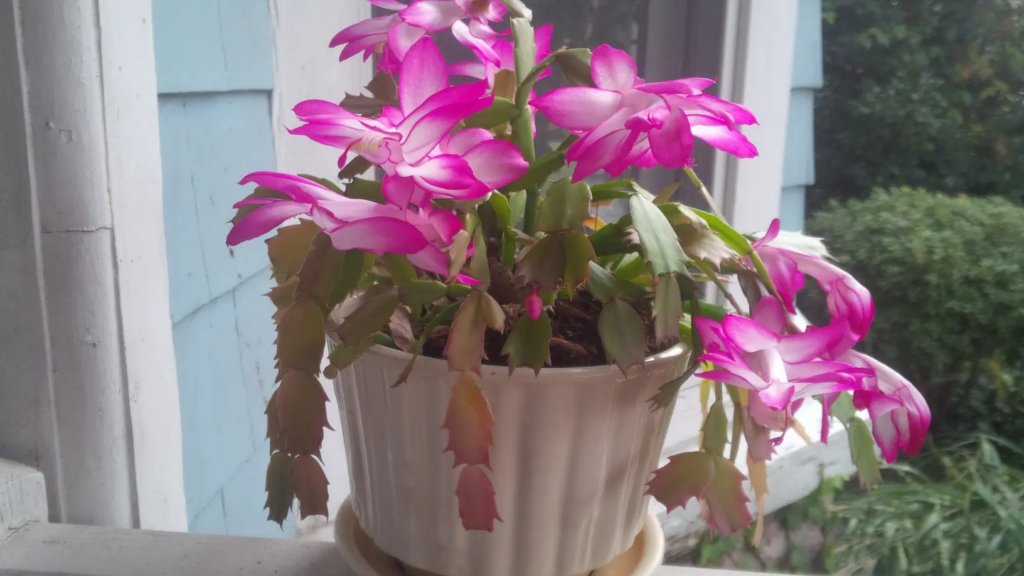
As the winter holidays approach, I think of the classic movies that I watch year after year to get into the spirit of the season. One of them is “The Homecoming,” which was released in 1971, and was the precursor of the long-running television show, The Waltons. The plot centers on a struggling Depression-era family preparing for Christmas and awaiting the return of the father, who has been away seeking work. In one of the more memorable scenes, the careworn mother goes to the root cellar to find some apples for a cake and comes back up with a Christmas cactus in full bloom. The beautiful plant, with ties to her mother and husband, is symbolic of enduring love and family connections.
Just the Basics
The Walton’s plant might have been a Schlumbergera bridgesii, which is sometimes known as Schlumberger x buckleyi, a showy epiphytic cactus with fleshy, segmented and jointed stems that arch over the sides of the pot. The foliage, while interesting, is not the main selling point for this member of the Cactaceae family. That distinction belongs to the showy, orchid-like flowers, which are produced in large numbers on a healthy plant and appear at the ends of the stems. Each bloom is made up of many slender, pointed petals fused at the base, and, depending on variety, may be white, peach, orange, purple, rose and red, with bi-colored varieties widely available.
Christmas cactus and its relatives, Thanksgiving cactus and Easter cactus, are sometimes simply labeled “holiday cactus” or “Zygocactus”.
The Differences
What’s up with all these holiday cacti? Is it all marketing, or are there differences?
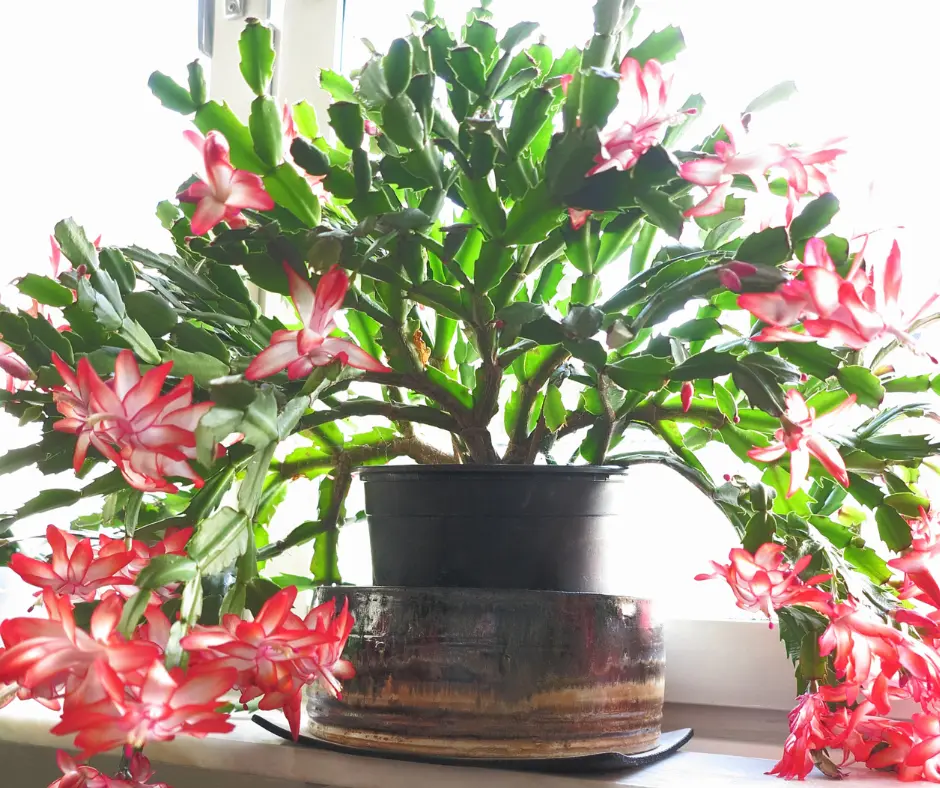
True Christmas cacti are unusual in the modern marketplace, because their stems are prone to breakage during the shipping process. Most plants that are labeled that way and sold at this time of the year re actually Thanksgiving cactus (Schlumbergera truncata) or Thanksgiving cactus hybrids, prepped in commercial greenhouses to bloom at Christmas. The stem segments of Thanksgiving cacti feature claw like-points, while the segments of true Christmas cacti bear smooth, rounded edges. The pointed buds and open flowers are similar on both species. Easter cactus, which belongs to a different, but related species, goes by the lengthy botanical name, Rhipsalidopsis gaertneri, is somewhat different. Blooming in spring, it features rounded stem segments, which may have fine hairs on the edges, and open, daisy-like flowers.
Origins
To give your holiday cactus life beyond the festive season, it is a good idea to understand the conditions favored by its ancestors. The “cactus” name, while botanically correct is also a bit of a misnomer, conjuring up images of dessert places. The ancestors of modern holiday cacti grew in Brazilian rainforests. Living as epiphytes or non-parasitic organisms that grow on other plants, the cacti flourished atop trees, receiving nutrients from the air, rain, and debris that accumulated around them. Since rainwater simply washed over them on its downward descent, the plants adapted to low-moisture situations.
A Cultured Cactus
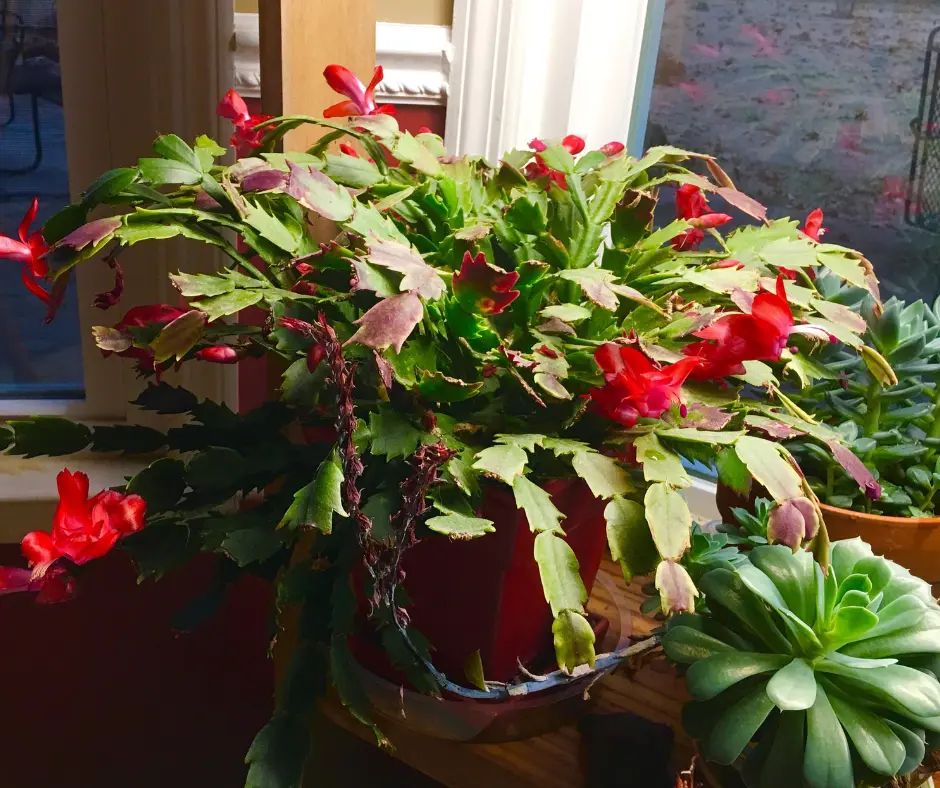
If you buy or receive a holiday cactus during the festive season, it is easy to care for and will rebloom next year with very little effort on your part. After flowering finishes, prune back each stem by pinching off enough sections to neaten the plant and give it an attractive habit. Place it in
a sunny windowsill. Holiday cacti are generally sold growing in soil-like potting mix, and what they really need is thoughtful watering and good drainage. Water only when the soil is dry. Eventually new growth should appear. If you are able, take the plant outside in the late spring and position it in a shady spot. Water occasionally, tapering off at the end of the growing season. By leaving the plant outside until the days start to shorten and the air cools, you will be helping to stimulate the bud formation process. When you return the plant to its indoor situation, avoid sudden temperature change, which will make the buds drop. Resume watering a bit more regularly and await the stunning results. Schlumbergera like to be pot bound, so don’t repot until the plant really seems ready to burst out of the pot.
When you finally do repot, enrich the added soil with a product like Fafard Ultra Container Mix with Extended Feed.
Choices, Choices
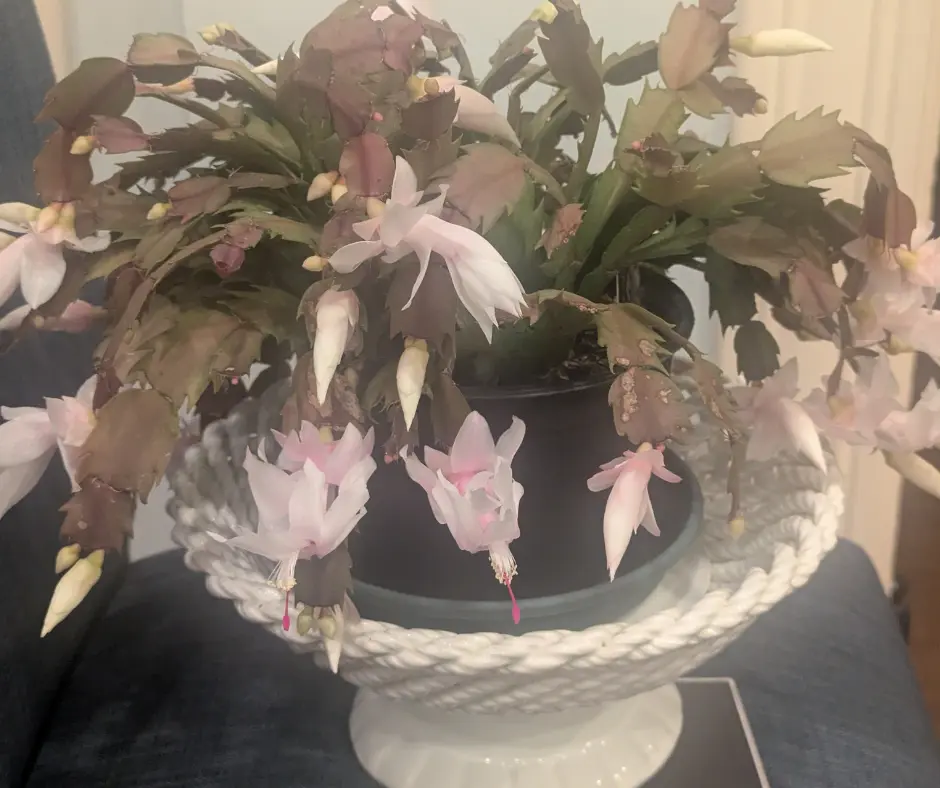
Many holiday cacti are available from online and bricks-and-mortar venders beginning in early November. Among named hybrids and varieties, the beautiful ‘Aspen’ stands out with wide white blooms bearing just a touch of dark pink in the center of each one. If hot pink lights up your indoor landscape, try another hybrid, ‘Pink Flame’. ‘Cristen’ is a good bicolor, with pink outer petals and white inner petals. Hybridizers have worked long and hard to expand the holiday cactus color range, and one of their best efforts is ‘Gold Charm’, with golden petals accented by a bit of red at the center.
Get ‘Em and Keep ‘Em
Unlike so many holiday plants that are bred and sold to last only through the festive season, holiday cacti can last and rebloom for years with only a minimum of care. Who knows, you might even be able to create a Walton’s Homecoming moment with your Schlumbergera.

About Elisabeth Ginsburg
Born into a gardening family, Elisabeth Ginsburg grew her first plants as a young child. Her hands-on experiences range from container gardening on a Missouri balcony to mixed borders in the New Jersey suburbs and vacation gardening in Central New York State. She has studied horticulture at the New York Botanical Garden and elsewhere and has also written about gardens, landscape history and ecology for years in traditional and online publications including The New York Times Sunday “Cuttings” column, the Times Regional Weeklies, Horticulture, Garden Design, Flower & Garden, The Christian Science Monitor and many others. Her “Gardener’s Apprentice” weekly column appears in papers belonging to the Worrall chain of suburban northern and central New Jersey weekly newspapers and online at http://www.gardenersapprentice.com. She and her feline “garden supervisors” live in northern New Jersey.
Share this post: