
When I wrote my July column, “Continuous Summer Color”, I had to limit myself due to space considerations. There were so many more plants that could have been mentioned and here are some that could have been noted.
The phrase “zonal denial” is one that it often mentioned among gardeners. Most gardeners like to try new plants, and it can be an especially fun challenge to try a plant, that according to gardening literature, will not survive in our climate zone. Hence the term “zonal denial”. It is almost as though we want to prove the plant researchers and scientists wrong and to show them that a particular plant WILL grow and perhaps even thrive in our space.
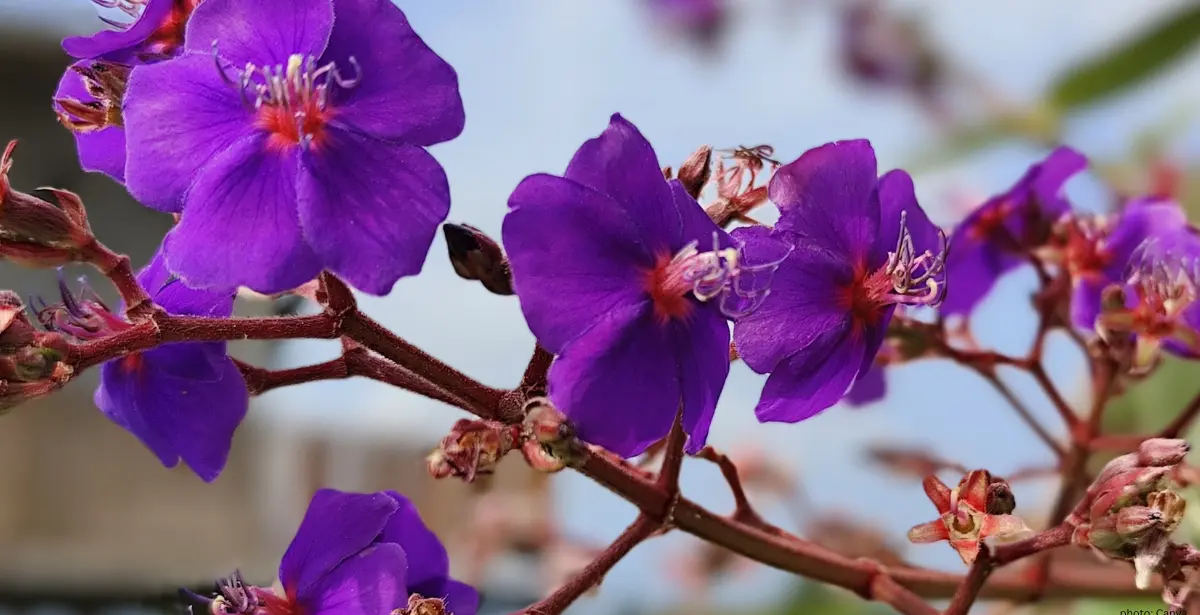
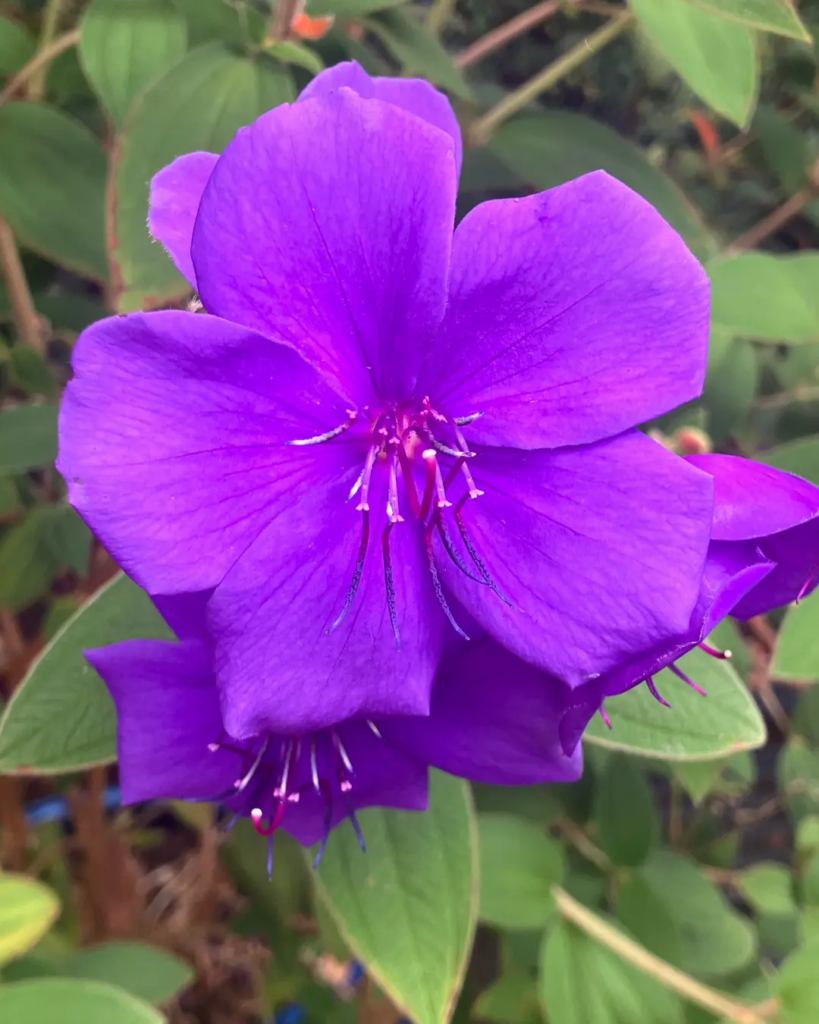
The Princess Flower, (Tibouchina urvilleana), is just such a plant. A native of Brazil, it is commonly sold in local garden centers as a tropical plant and is usually treated as a summer annual. It should be considered a shrub and is fast growing and will bloom most of the summer. The flowers are a brilliant royal purple.
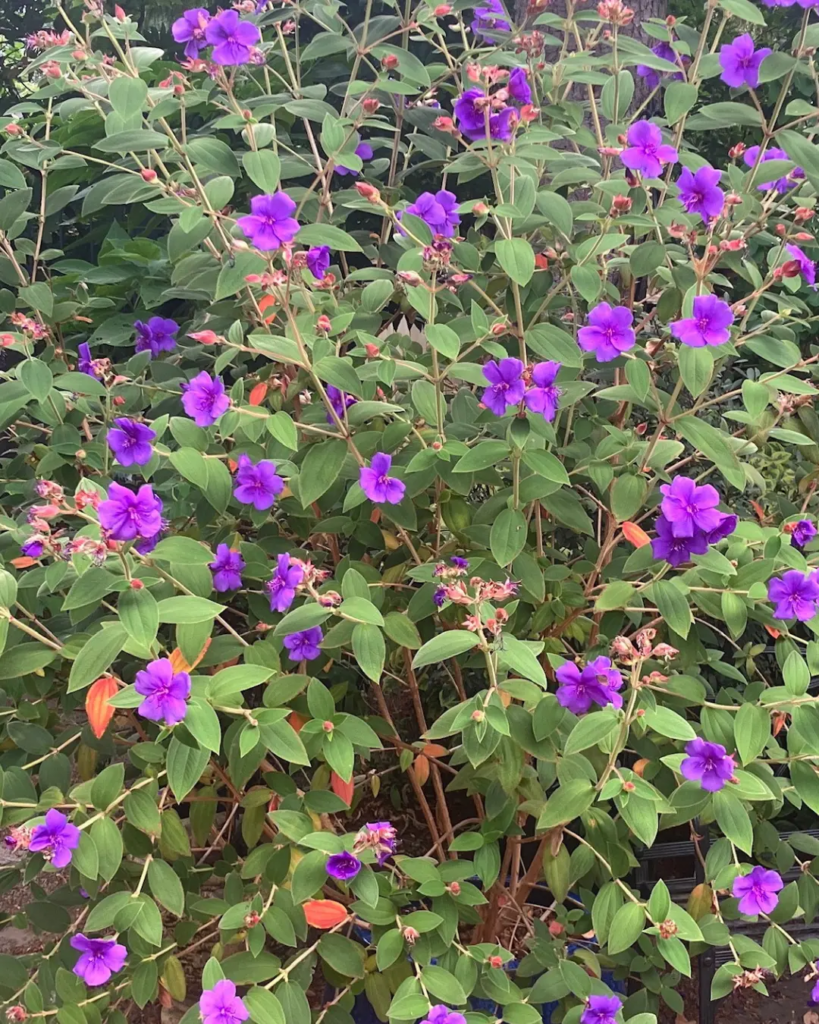
In the spring of 2025, I bought a one-gallon size plant and put it in a large pot. It was in a sunny location and quickly grew and bloomed until fall. Our winter was relatively mild, but we did have some freezing temperatures. My plant lost all its leaves, and I was expecting to replace it in the spring. However, in the spring, I noticed that new growth was appearing around the base. Today my plant is probably seven feet tall and almost as wide with multiple flowers that have appeared all summer with many flower buds that are continuing to open. Even if it had not survived the winter, it is a garden worthy summer bloomer.
In my “Continuous Summer Color” column of last month, the plants mentioned were all primarily sun lovers as is the Tibouchina. However, there are many plants that will provide summer color and perform well in shady locations. Here are some that have grown and thrived in my garden.
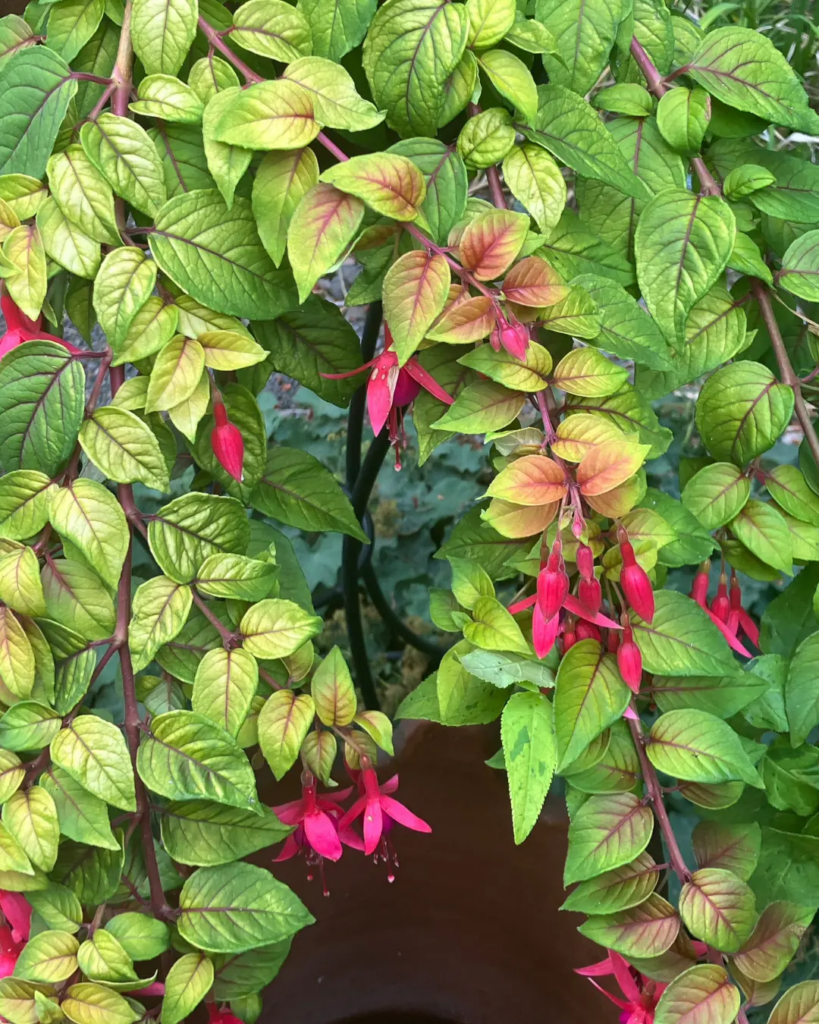
Fuchsias are usually planted for their flowers, but Fuchsia ‘Autumnale’ is probably noted more for the foliage than the flowers. It does have red flowers, but this fuchsia is known for the multi-colored foliage in shades of green, yellow, red, chartreuse and bronze. The plant has stems that hang, making this ideal for a
hanging basket, window box, or in a large pot of mixed foliage and letting the stems hang downward out of the pot. It can be a stunning display. ‘Autumnale’ can take some sun, but it is best to have it in a protected location from hot afternoon sun.
In my garden, there are three different begonias that are diverse in foliage, flower, and garden placement location. All three have provided color in my garden throughout the summer and I would expect them to continue until frost.
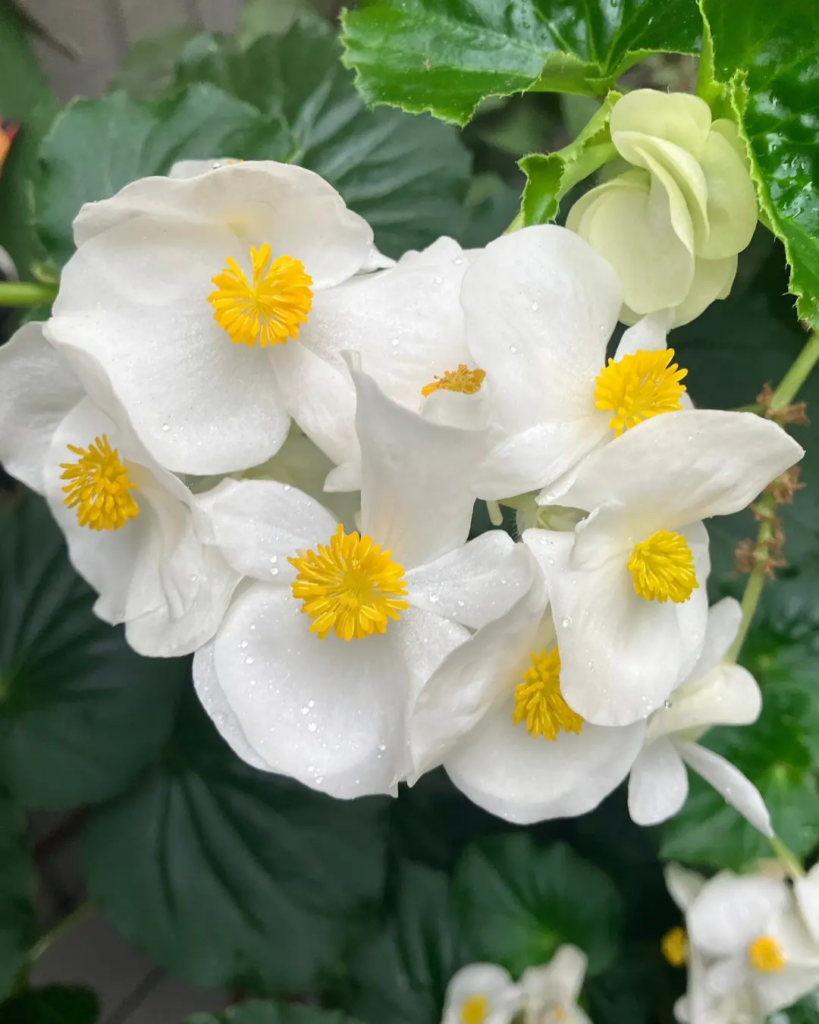
The first is Begonia SurefireÒ White. This was a new plant in my garden and with its shiny green foliage and beautiful clusters of white flowers, it is excellent in a container. It receives morning sun and afternoon shade.
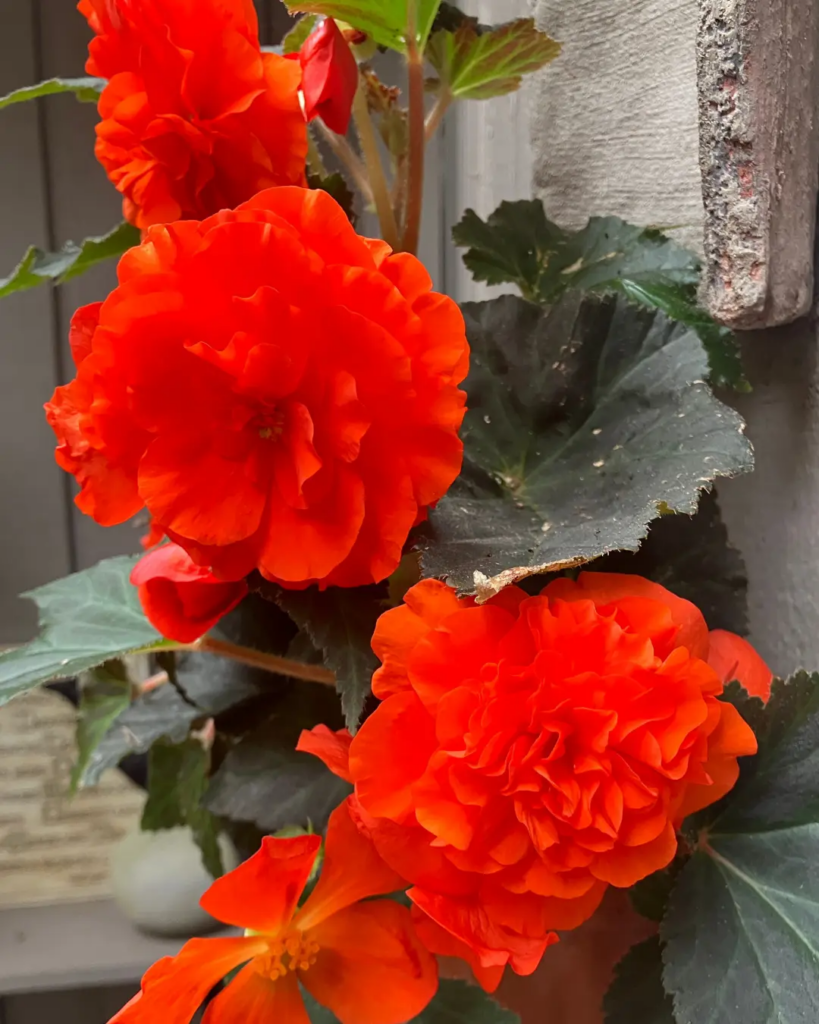
The second is a tuberous begonia. Sometimes I think that gardeners forget about these begonias that will provide some wonderful color in the shade and can be upright growing or trailing. Started from tubers indoors in the spring, they will bloom from early summer until the first frost. In our garden, we have an orange one in a wall planter that has given us color in a space that only receives early morning sun.
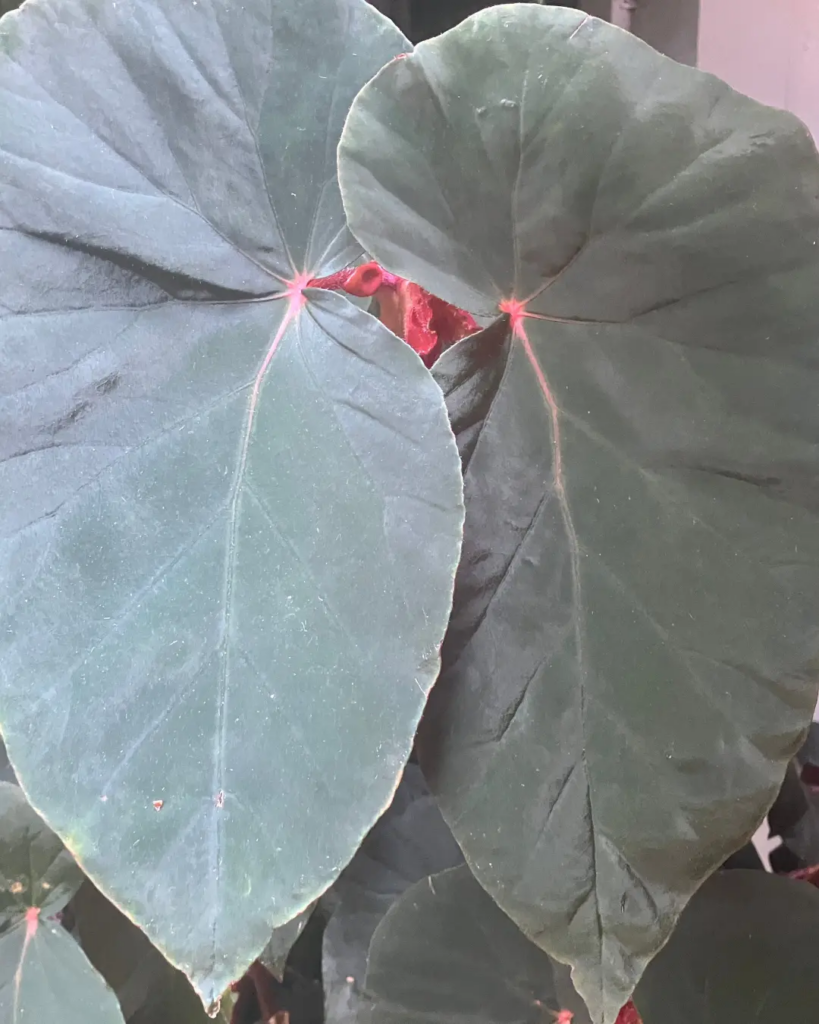
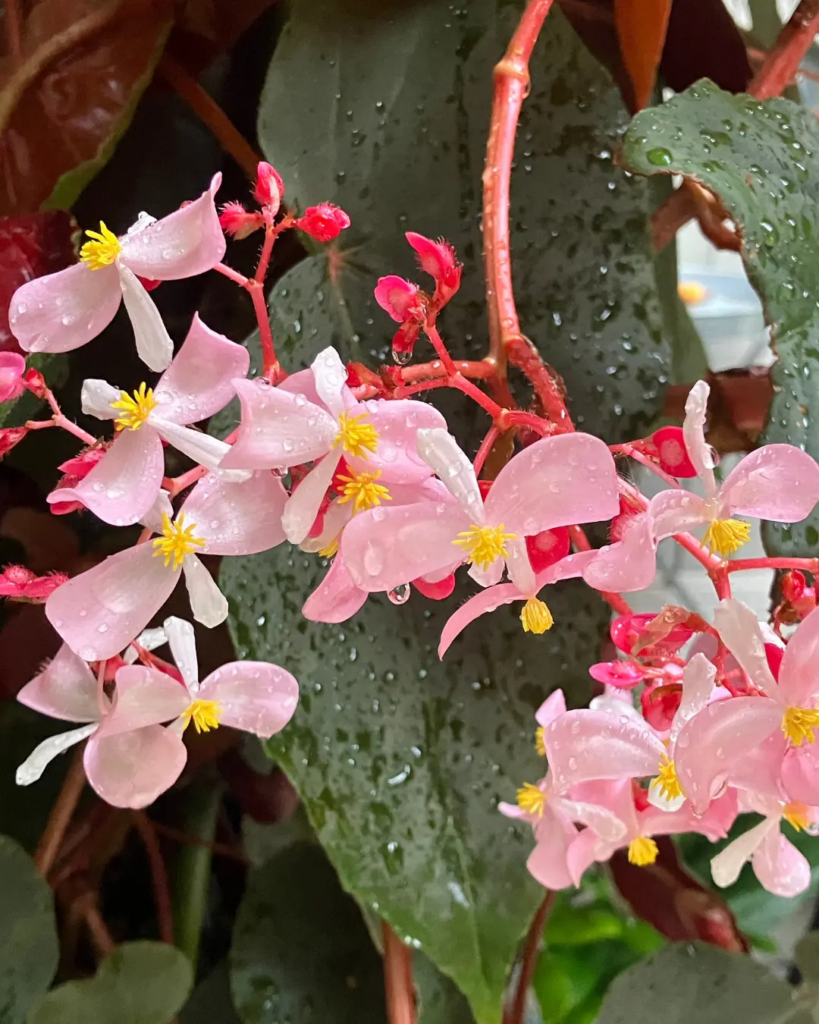
The third and final begonia is one that has exceptional foliage and beautiful clusters of light pink flowers. It is called Begonia hybrida ‘Elephant Ear’, and once you see it, the reason for the name will be obvious because of the large leaves. While the top side of the leaves are gray, the underside is red which makes quite a contrast in color. This is a fairly large container plant, reaching about three feet.
All the plants mentioned here are best grown in a humus rich soil that will provide moisture retention and good drainage. Black Gold All Purpose Potting Mix would be ideal. This is especially important for those plants in containers because, even if in the shade, the soil can easily become dry with the summer heat.
Of course there are other plants that could be mentioned, but I’ll stop at these for now. This is a good time to visit other gardens and get ideas for plants that would fit into your own garden next year.

About Mike Darcy
Mike lives and gardens in a suburb of Portland, Oregon where he has resided since 1969. He grew in up Tucson, Arizona where he worked at a small retail nursery during his high school and college years. He received his formal education at the University of Arizona where he was awarded a Bachelor of Science Degree in Horticulture, and though he values his formal education, he values his field-experience more. It is hard to beat the ‘hands on’ experience of actually gardening, visiting gardens, and sharing information with other gardeners. Mike has been involved with gardening communications throughout his adult life. In addition to garden writing, he has done television gardening shows in Portland, and for over 30 years he hosted a Saturday radio talk show in Portland. Now he writes, speaks, gardens and continues to share his love of gardening. To be connected to the gardening industry is a bonus in life for Mike. He has found gardeners to be among the friendliest and most caring, generous people. Consequently, many of his friends he has met through gardening