
Growing more food in less space, with fewer inputs and better results, is a challenge every grower faces. According to Frontdoor, 54% of Americans planning to grow food aim to cover 23% of their grocery costs through home production. The right growing method makes that goal achievable.
Introduction
Choosing an innovative growing method is no longer optional for growers who want consistent results. Whether you manage a commercial operation or a home garden, the method you select shapes your water use, yield, labor demands and long-term soil health.
The top 7 best practices for innovative growing methods covered here reflect what professional horticulturists and home growers are actually adopting in 2026. Each approach is backed by documented performance data and real-world results.
Science-driven growing media and thoughtful method selection work together to support that outcome. Growers who align their chosen method with their specific crop goals, available space and resource constraints are best positioned to see reliable, repeatable results across seasons.
Start with a Method That Matches Your Space and Goals
Matching your growing method to your actual space and goals is the first step toward consistent performance. According to the Axiom Gardening Outlook Study, the most popular formats among food gardeners in 2025 were raised bed (47%), in-ground (45%), container (43%), indoor (27%) and greenhouse (13%).
Key factors to evaluate before choosing a method:
Available space: Small patios favor containers or vertical systems; larger plots support raised beds or in-ground growing
Water access: Hydroponic and self-watering systems suit areas with limited or expensive water
Time commitment: According to Axiom, time was the top barrier to gardening in 2024, so low-maintenance methods reduce dropout risk
Soil conditions: Poor native soil makes raised beds or soilless growing media the practical choice
Budget: Straw bale and in-ground methods have lower startup costs than hydroponic systems
Use Raised Bed Gardening to Improve Soil Control
Raised bed gardening gives growers direct control over substrate quality, drainage and root environment. A 2025 study published in Frontiers in Sustainable Food Systems found that raised bed planting increased net returns by 20%, with water use efficiency 35% better than flatbed systems.
Practices that improve raised bed performance:
Bed depth: A 2025 University of Arkansas study confirmed beds at least 18 inches deep produced 30% higher yields for deep-rooted vegetables
Growing media selection: High-quality peat moss-based growing media supports aeration, moisture retention and root development
Seasonal soil top-up: Raised bed mix settles 2 to 3 inches per year as organic matter breaks down, requiring annual replenishment
Spring advantage: Raised beds warm 2 to 4 weeks faster than in-ground soil, extending the growing season
Water efficiency: Research on the H2Grow raised bed system found seasonal irrigation requirements reduced by 33% compared to conventional beds
Apply Square Foot Gardening to Maximize Yield Per Area
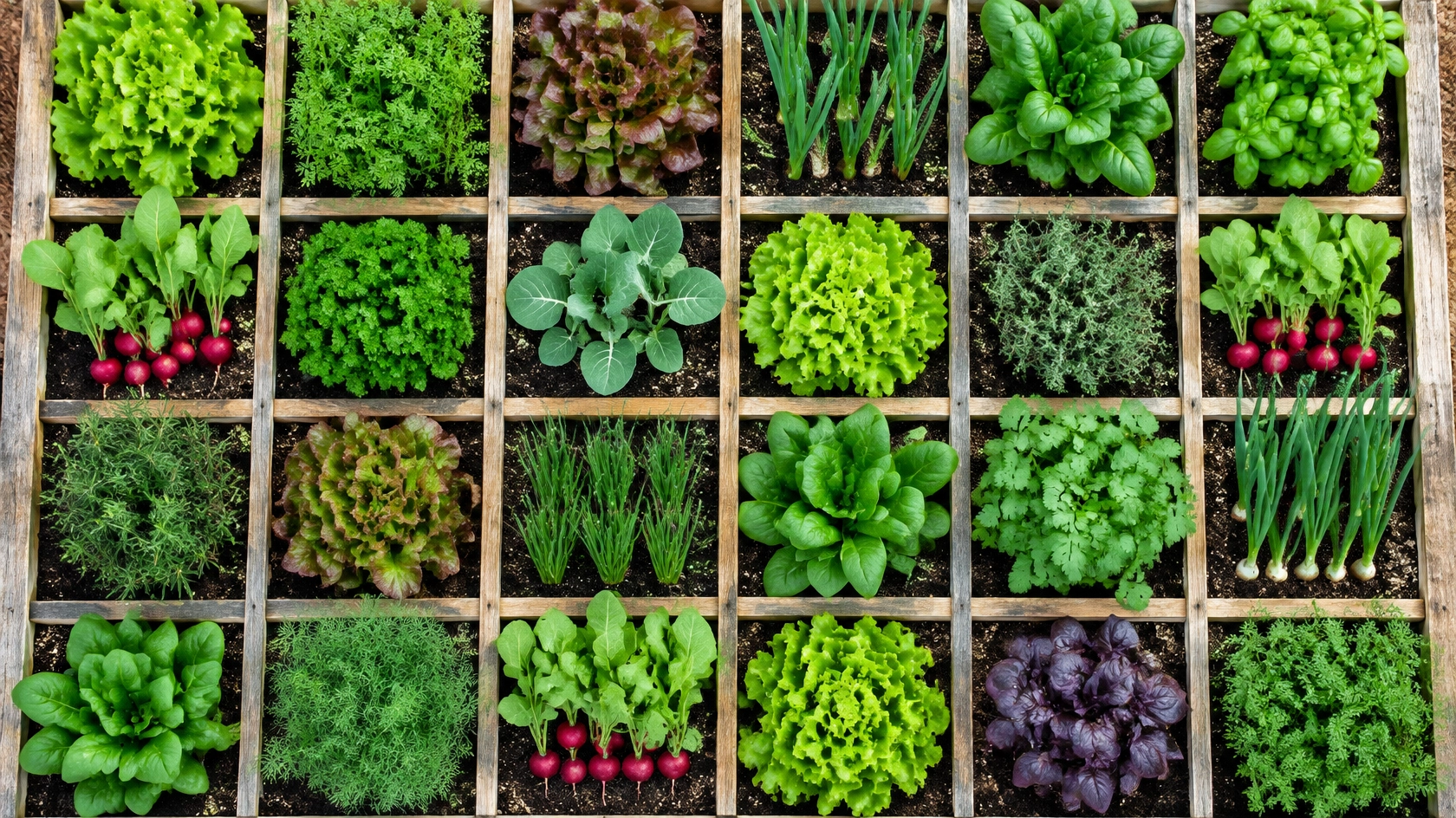
Square foot gardening is one of the most efficient low-tech methods available to growers with limited space. The Square Foot Gardening Foundation estimates the method costs 50% less and uses only 10% of the water compared to single-row gardening, according to The Old Farmer’s Almanac.
Practices that make square foot gardening work:
Grid planning: Divide beds into one-foot squares and assign crops by plant size to eliminate wasted space
Intensive spacing: Traditional row gardening uses only 30 to 50% of garden area for actual plants; SFG eliminates that waste
Succession within squares: Each square can support three separate crops per year, creating multiple harvest cycles from the same footprint
Yield benchmarks: A home garden productivity study found growers harvest an average of 1.50 pounds of produce per square foot
Growing media quality: A consistent, well-structured growing mix supports the dense planting that SFG requires
Adopt Hydroponics for Water-Efficient Indoor Production
Hydroponic systems deliver measurable advantages for indoor and controlled-environment production. Hydroponic systems use up to 90% less water than traditional farming because water is recirculated rather than lost to soil absorption.
Choosing the Right Hydroponic System
The system type determines crop suitability, cost and complexity. Deep water culture suits leafy greens and herbs. Nutrient film technique works well for fast-cycling crops. Ebb-and-flow systems offer flexibility for mixed production.
According to Green Genius, hydroponics delivers 20 to 50% faster plant growth and 30% higher yields through precise nutrient delivery. Matching the system to your crop list avoids costly retrofits later.
Managing Nutrient Solution Quality
Nutrient solution management is the most critical variable in hydroponic production. pH, electrical conductivity and dissolved oxygen levels must stay within tight ranges for each crop type.
Hydroponic basil, for example, can yield 1.8 kg per square meter compared to 0.6 kg in soil, but only when nutrient delivery is consistent. Regular monitoring and solution changes prevent salt buildup and deficiency symptoms.
Growing Media Options for Hydroponics
Hydroponic systems rely on inert growing media to anchor roots and support moisture and oxygen balance. Common options include:
Coir: Made from coconut fiber, adds structure and supports both aeration and water holding
Perlite: Lightweight and free-draining, often blended with coir for balanced moisture control
Rockwool: Widely used in commercial production for its consistent fiber structure and sterility
Expanded clay aggregate: Reusable and pH-neutral, suited to ebb-and-flow and deep water culture systems
Professional horticulturists select growing media based on crop type, system design and irrigation frequency to achieve consistent performance across production cycles.
Integrate Vertical Gardening to Scale Without Extra Land
Vertical gardening allows growers to multiply productive area without expanding the physical footprint. According to Farmonaut, vertical farms use over 90% less land while harvesting 80% more per unit of area compared to conventional farming.
Practices that support effective vertical growing:
Structure selection: Wall-mounted panels, tower systems and tiered shelving each suit different crop types and space configurations
Crop selection: Leafy greens, herbs and strawberries perform best in vertical setups due to shallow root requirements
Yield potential: A peer-reviewed 2025 analysis confirmed optimized vertical systems achieve yield outputs 10 to 400 times greater per square meter depending on crop type
Growing media: Lightweight, well-structured growing media is essential in vertical systems where weight and drainage both matter
Lighting Considerations for Vertical Setups
Lighting is the primary technical challenge in vertical growing. Each tier must receive adequate light intensity and spectrum for the crops it supports. Natural light rarely penetrates uniformly across multiple levels, making supplemental LED grow lights standard in most indoor vertical setups.
Vertical farming boosts production efficiency by cutting growing cycles by 40 to 60%, according to World Metrics, but that gain depends on consistent, well-distributed light across every tier.
Use Companion Planting to Reduce Inputs Naturally
Companion planting uses plant relationships to manage pests, improve fertility and reduce the need for synthetic inputs. A 2025 peer-reviewed study in Frontiers in Plant Science found tomato yields grown using reduced nitrogen and companion planting increased by 34.26% compared to monoculture over two growing seasons.
Effective companion planting strategies include:
Trap cropping: A University of Connecticut study found Blue Hubbard squash lures cucumber beetles away from other varieties with a 94% success rate
Nitrogen fixation: Legume-based companion plants can boost crop yields by up to 13% and significantly reduce nitrogen fertilizer inputs, according to ResearchGate
Input reduction: Science-backed companion planting methods reduce chemical inputs by as much as 70%, according to NCAT
Soil health: Companion systems support long-term soil fertility without depleting the growing media that root systems depend on
Implement Succession Planting for Continuous Harvest
Succession planting staggers sowing dates to spread harvest over weeks or months rather than concentrating it in a single flush. Home gardeners who master this approach can see productivity jump by 30 to 50%, with staggered plantings of leafy greens yielding 4.2 kg per square meter compared to 2.8 kg from a single planting.
By splitting one seed packet into five or six small sowings spaced two to three weeks apart, harvest windows stretch from a single week to two to three months of continuous output. This approach suits both professional growers managing market supply and home growers reducing waste.
Building a Succession Planting Calendar
A written calendar is the practical tool that makes succession planting work at scale. NCAT documents that planting three squash varieties in 100 linear feet each on April 15 can yield around 1,500 pounds of squash over a six-week succession window.
Map each crop’s days-to-maturity against your last and first frost dates, then work backward to set sowing intervals. Growers who plant fall crops in vacated spaces can get approximately 40% more food from the same square footage per season.
Explore Straw Bale and Hugelkultur for Low-Input Production
Straw bale and hugelkultur methods suit growers who want productive beds without significant infrastructure investment. Joel Karsten, pioneer of the Straw Bale Gardens method, reports that more than 1 million people worldwide have adopted the approach for growing in poor or compacted soil conditions.
Low-input method highlights:
Straw bale cost: A single bale costing $4 to $10 holds 5 to 7 gallons of water and maintains an internal temperature of 75 to 90 degrees Fahrenheit during decomposition, according to The Old Farmer’s Almanac
Season extension: Straw bales keep roots warm past the last frost, extending the productive window without additional infrastructure
Hugelkultur longevity: Hugelkultur beds deliver up to 20 years of slow-release nutrient output from decomposing wood cores
Soil building: A 2024 peer-reviewed study found increased carbon content in soils treated with hugelkultur, as well as reduced waterlogging
Early production: Hugelkultur beds produce crops approximately two weeks ahead of conventional raised beds due to decomposition-generated heat
Conclusion
Innovative growing methods share a common foundation: matching the technique to the grower’s space, goals and resources. Whether that means the precision of hydroponics, the efficiency of square foot gardening or the low-input simplicity of straw bale production, each approach rewards thoughtful planning and quality inputs.
Professional horticulturists consistently find that growing media selection plays a critical role across all these methods. Raised beds, vertical systems and hydroponic setups all depend on substrate that delivers consistent aeration, moisture retention and root support. Getting those fundamentals right sets the stage for reliable results, season after season.
Frequently Asked Questions
How much does it cost to start a raised bed garden in the United States?
Raised bed startup costs in the United States vary by size and material. Lumber and hardware for a basic 4-by-8-foot bed typically run $50 to $150, while a single straw bale costs just $4 to $10 as an alternative.
Growing media, including peat moss-based mixes, adds $30 to $80 per bed depending on depth. Growers who invest in quality substrate from the start reduce the need for amendments in subsequent seasons.
Which innovative growing methods work best for small urban spaces in the United States?
Container growing, vertical gardening and square foot gardening are the most practical options for urban growers in the United States with limited outdoor space. The 2025 Axiom New and Novice Gardener Survey found 35.2% of respondents were first-time gardeners, many of them in urban settings.
Vertical systems and compact raised beds allow these growers to produce meaningful harvests from patios, balconies and small yards without requiring in-ground access.
How many harvests per year can a hydroponic system produce?
Hydroponic systems enable 4 to 6 harvest cycles per year for most crops, compared to 1 to 2 cycles for outdoor soil production. Leafy greens and herbs cycle fastest.
The indoor farming market reached approximately USD 42.0 billion in 2025, reflecting strong commercial confidence in the productivity gains these systems deliver. Controlled environments eliminate weather disruptions, allowing growers to maintain consistent production schedules year-round.
How does companion planting compare to chemical pest management?
Companion planting reduces reliance on synthetic inputs without sacrificing yield. A push-pull companion planting system documented in Kenya tripled corn yield compared to monoculture while the legume companion fixed more than 300 pounds of nitrogen per acre, according to Virginia Tech Extension.
Permaculture-based companion growing systems can reduce external inputs by up to 90%. Chemical management delivers faster knockdown but builds no long-term soil benefit.
How long does it take to see results from succession planting?
Most growers see measurable harvest improvements within the first full growing season. Sowing zinnias every 21 days, for example, boosted stem production by 35% compared to a single planting.
For vegetables, the first staggered harvest typically arrives within 30 to 45 days of the initial sowing, with continuous output following at regular intervals through the season. A written planting calendar is the most effective tool for staying on schedule.