
Farming has changed more in the past 30 years than in the previous 3,000. Yet traditional methods still feed billions, and innovative techniques are reshaping what’s possible. Understanding both approaches helps growers make smarter decisions about their operations.
Introduction
The debate over traditional farming vs innovative techniques is not simply about old versus new. It’s about matching the right method to the right context, crop and resource base.
Traditional farming carries centuries of proven knowledge. It supports rural livelihoods, preserves crop diversity and works well for producers who rely on locally available inputs. Innovative techniques, from precision agriculture to controlled environment growing, offer tools that can dramatically improve yield efficiency and resource use.
For professional growers and horticulturists across the United States, the real opportunity lies in understanding where each approach excels. The data increasingly shows that combining both methods delivers results neither can achieve alone.
What Traditional Farming Is (And Why It Still Matters)
Traditional farming remains the backbone of global food production, supplying the majority of the world’s food through family-owned and smallholder operations. Family-owned farms represent 95% of all U.S. farms, according to FAO Family Farming Data, and approximately 570 million smallholder farmers worldwide produce more than 70% of the world’s food supply.
Traditional methods offer real, lasting advantages:
- Low input costs: Locally sourced seeds, natural manure and rainwater reduce the need for expensive purchased inputs, making traditional farming accessible for small producers.
- Soil health through rotation: Traditional crop rotation can boost soil fertility by up to 30% compared to continuous monoculture, according to Agriculture Sciences Journal.
- Crop genetic diversity: Traditional systems support two to three times more crop genetic diversity than mechanized monocultures, which matters for long-term ecological resilience.
- Cultural knowledge: Generations of place-based knowledge inform planting timing, pest management and water use in ways that formal research is still working to document.
- Economic contribution: In 2024, U.S. agriculture, food and related industries contributed $1.537 trillion to GDP, according to USDA data.
What Innovative Farming Techniques Look Like Today
Innovative farming covers a wide range of technologies, from GPS-guided tractors to fully enclosed vertical farms. The global smart agriculture market was valued at USD 23.2 billion in 2025 and is projected to reach USD 59.6 billion by 2035, according to GM Insights.
How Automation and Data Drive Modern Growing
Precision farming is now the largest AgTech segment, valued at $15.1 billion in 2025 and growing at a 12.7% CAGR, according to Grand View Research. Automation tools include GPS-guided equipment, variable rate technology (VRT) and AI-driven sensors that monitor soil moisture, nutrient levels and crop stress in real time.
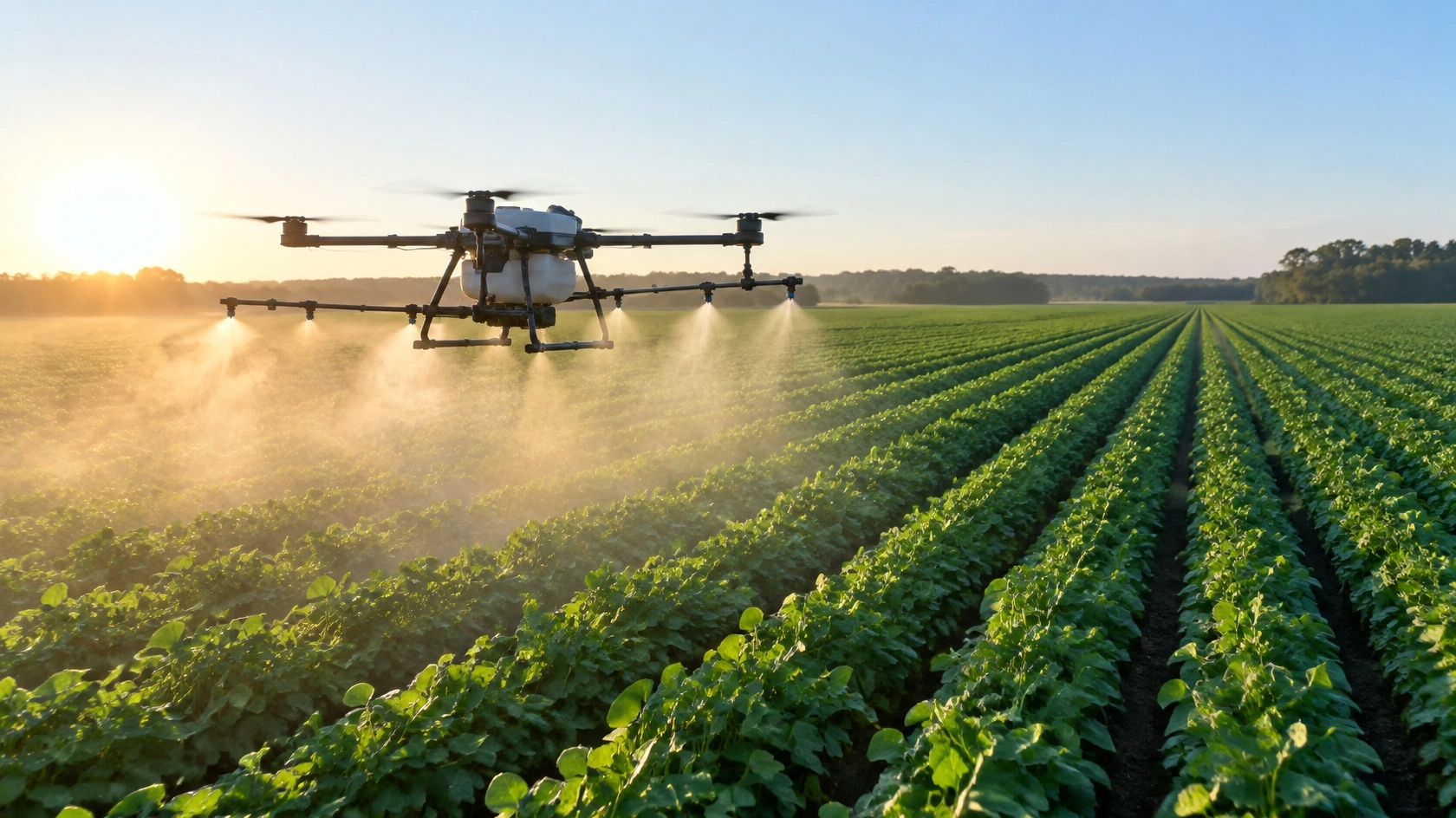
U.S. agricultural spray drones treated 16.4 million acres in 2025, up 58.7% year-over-year, according to Ag Drone Directory. These tools help growers apply inputs precisely where needed, reducing waste and improving efficiency across large acreages.
Controlled Environment Agriculture Explained
Controlled environment agriculture (CEA) includes hydroponics, aquaponics and vertical farming. These systems remove dependence on weather and soil conditions entirely. The global vertical farming market reached $8.52 billion in 2025, with hydroponics leading at 56.7% of market share, according to Fortune Business Insights.
CEA systems are particularly relevant for specialty crops and high-value horticultural production. They allow growers to dial in growing media composition, nutrient delivery and environmental conditions with precision that open-field farming cannot match.
How Farming Techniques Have Evolved Over Time
Farming techniques have evolved continuously over the past 12,000 years, reshaping human civilization at every stage. Agriculture began approximately 12,000 years ago during the Neolithic Revolution, transforming human societies from hunter-gatherers into settled farmers and driving global population growth from roughly 5 million to 8 billion today, according to National Geographic.
Each era of agricultural development built on what came before. The shift from hand tools to mechanization, and then from mechanization to digital precision, reflects a continuous process of adaptation rather than replacement.
The Green Revolution and Mechanization
The Green Revolution of the 1960s through 2000s demonstrated how technology could transform traditional farming at scale. Between 1960 and 2000, crop yields in developing countries rose 208% for wheat, 109% for rice and 157% for maize, according to FAO historical data.
India’s wheat production surged from 12.3 million tons in 1965 to 20 million tons in 1970, driven by high-yield varieties developed by Norman Borlaug, according to the USDA. From 1950 to 1992, global grain output rose from 692 million to 1.9 billion tons on virtually the same farmland.
Today, the world must produce about 50% more food by 2050 compared to 2012 volumes, according to FAO, making continued innovation essential.
Traditional vs Innovative Farming: Where They Diverge
The gap between traditional and innovative farming is measurable across yield, water use and environmental outcomes. A peer-reviewed study of 104 respondents found modern farming produced a mean yield of 12,903 kg versus 7,103 kg for traditional methods, according to ResearchGate.
Productivity and Yield Efficiency
Traditional farming typically yields 1 to 2 tons per acre. Modern precision farming achieves 3 to 6 or more tons per acre.
A 2025 study by the Association of Equipment Manufacturers found precision agriculture delivers, on average, a 5% increase in crop productivity, an 8% reduction in fertilizer use and a 9% reduction in herbicide use versus conventional methods, according to AEM.
A single modern farmer can manage 1,500 or more acres that would have required 50 to 100 workers in traditional systems.
Water and Irrigation Methods
Agriculture accounts for 72% of global freshwater withdrawals, according to FAO AQUASTAT. Traditional flood irrigation operates at only 30 to 50% efficiency, meaning up to 60% of water is lost. Drip irrigation reaches 90 to 95% efficiency, and hydroponic systems can reduce water use by up to 90%.
For professional growers managing water costs and drought risk, this efficiency gap is significant.
Environmental and Sustainability Impact
Variable Rate Technology has delivered yield increases of up to 62% while reducing fertilizer usage by 60% and pesticide application by up to 80% in documented field applications, according to Frontiers in Plant Science.
Traditional systems, however, support greater biodiversity and often require fewer energy inputs. Since 1990, cereal yields have increased by over 70% while requiring 10% less land, according to AEI, showing that innovation can reduce agriculture’s land footprint over time.
Cost Comparison: Upfront Investment vs Long-Term Returns
Upfront investment and long-term returns differ sharply depending on the farming method chosen. Cost is one of the sharpest points of divergence between traditional and innovative farming, and the payback timeline varies by scale and crop type.
Typical Cost Ranges for US Growers
Traditional soil farming costs approximately $12,000 to $25,000 per acre to establish. Hydroponic systems run $85,000 to $110,000 per acre, and a full five-year precision agriculture rollout on a 1,000-acre grain farm totals approximately $530,000, according to ResearchGate economic analysis.
Despite high upfront costs, precision agriculture delivers compelling returns:
- Median ROI: $5.70 per dollar spent across precision agriculture implementations over five years, according to AEM.
- Revenue gain: A 5% yield increase on a 1,000-acre row crop farm generates $66,000 in additional annual revenue.
- Fertilizer savings: Up to $20,000 per year in fertilizer cost reduction on the same operation.
- Adoption barrier: Only 27% of U.S. farms currently use precision agriculture technologies, with high upfront costs cited as the primary barrier, according to the U.S. GAO.
- Regenerative transition: Hybrid regenerative farms report production costs decreasing by 25 to 35% over five years as soil health improves, according to McKinsey.
Combining Traditional and Innovative Methods for Best Results
The most effective farming operations in 2026 don’t choose one approach exclusively. They draw on both. McKinsey’s 2024 Global Farmer Insights survey of 4,400 farmers across nine countries found the leading sustainability practices include crop rotations (68%), reduced or no-tillage (56%) and variable-rate spraying (40%), all of which blend traditional principles with modern tools.
Key strategies that bridge both worlds include:
- No-till farming: Approximately 45% of U.S. farmland uses some form of no-till practices, which reduce soil erosion by up to 90% and fuel consumption by 50 to 80%, according to Farmonaut.
- Precision-guided crop rotation: Using data to optimize traditional rotation schedules improves both yield and soil outcomes.
- Organic certification: Organic agriculture is now practiced in more than 180 countries, with nearly 99 million hectares managed organically by 4.8 million farmers, according to IFOAM Organics International.
- AI and IoT integration: In India, AI and IoT precision farming reduced input costs by 15 to 20% and chemical use by 25% while supporting traditional biodiversity, according to Farmonaut.
Conclusion
Traditional farming and innovative techniques each carry genuine strengths. Traditional methods offer proven resilience, low input costs and ecological diversity. Innovative approaches deliver measurable gains in yield efficiency, water conservation and resource management.
The most forward-looking growers recognize that these approaches are not opposites. They are complementary tools. Professional horticulturists and commercial growers who integrate data-driven methods with time-tested growing knowledge are best positioned to meet the demands of a changing climate, growing population and competitive market.
Frequently Asked Questions
How much does precision agriculture cost for U.S. growers?
Precision agriculture costs vary significantly in the United States depending on farm scale and technology mix. A full five-year rollout on a 1,000-acre grain farm totals roughly $530,000, with Year 1 hardware alone reaching $250,000. Hardware costs have dropped by 70 to 80% over six years, making entry more accessible.
Growers report fertilizer savings and yield gains that can offset costs within three to five years of adoption.
How widely is precision farming adopted across the United States?
Adoption varies sharply by farm size. Only 27% of U.S. farms or ranches use any precision agriculture practice overall, but this rises to 68% of large-scale crop farms for tools like guidance autosteering. Variable rate technology adoption ranges from just 5% on small farms to 45% on large-scale operations.
The U.S. GAO identifies high upfront costs, data ownership concerns and lack of interoperability as the top three barriers to broader adoption.
Can hydroponics replace traditional soil-based growing for specialty crops?
Hydroponics excels for high-value, fast-cycling specialty crops. Vertical farms using hydroponic systems produce 30 times more lettuce per square meter than traditional farms, with up to 15 harvests per year compared to one to three traditionally.
Setup costs run $500,000 to $4 million per acre, and energy costs average $200,000 per year per facility. This makes hydroponics best suited for urban-adjacent operations growing leafy greens, herbs and other premium crops.
How does precision farming compare to traditional farming on environmental impact?
Precision farming consistently outperforms traditional methods on key environmental metrics. A 2025 AEM and Kearney study found precision agriculture delivers a 5% reduction in water use and a 7% reduction in fuel consumption versus conventional methods.
John Deere’s ExactShot fertilizer system cuts fertilizer use by up to 60% and has the potential to save over 93 million gallons of fertilizer in U.S. corn crops alone, according to AgDaily.
How long does it take for innovative farming investments to pay off?
Payback timelines depend on the technology and crop. Regenerative and hybrid farms that blend traditional and modern methods report production costs decreasing by 25 to 35% over five years as soil health improves, with yields typically exceeding conventional levels by years three to five.
Precision agriculture implementations show a documented median five-year ROI of $5.70 per dollar spent. Starting with a single high-value use case, such as precision irrigation or variable-rate fertilization, shortens the payback window considerably.