
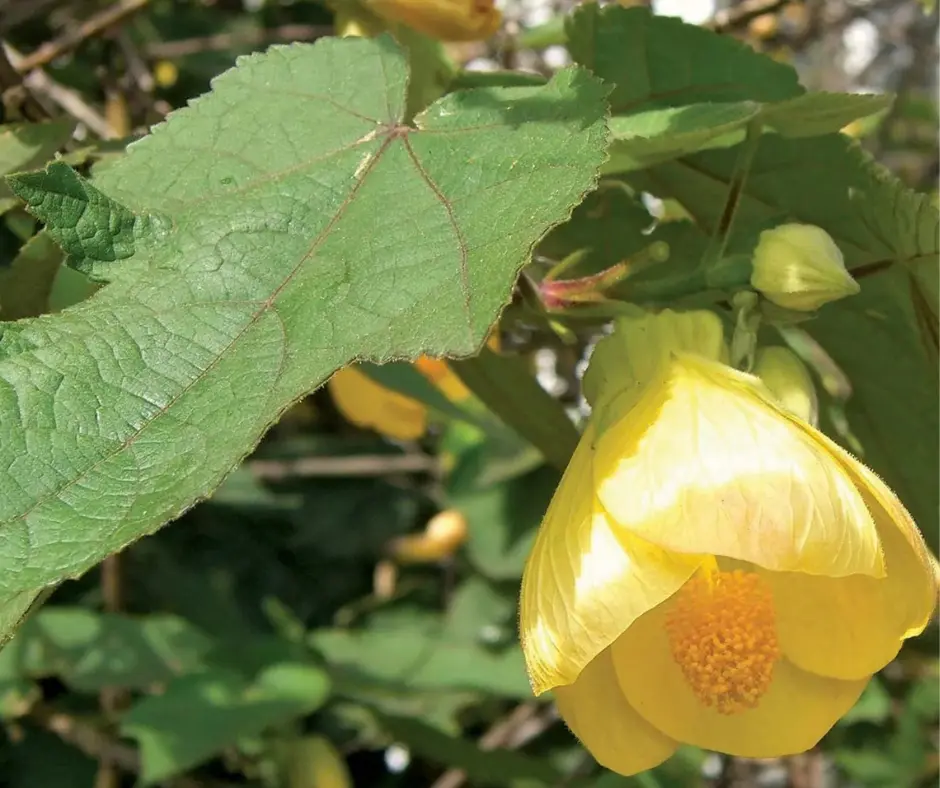
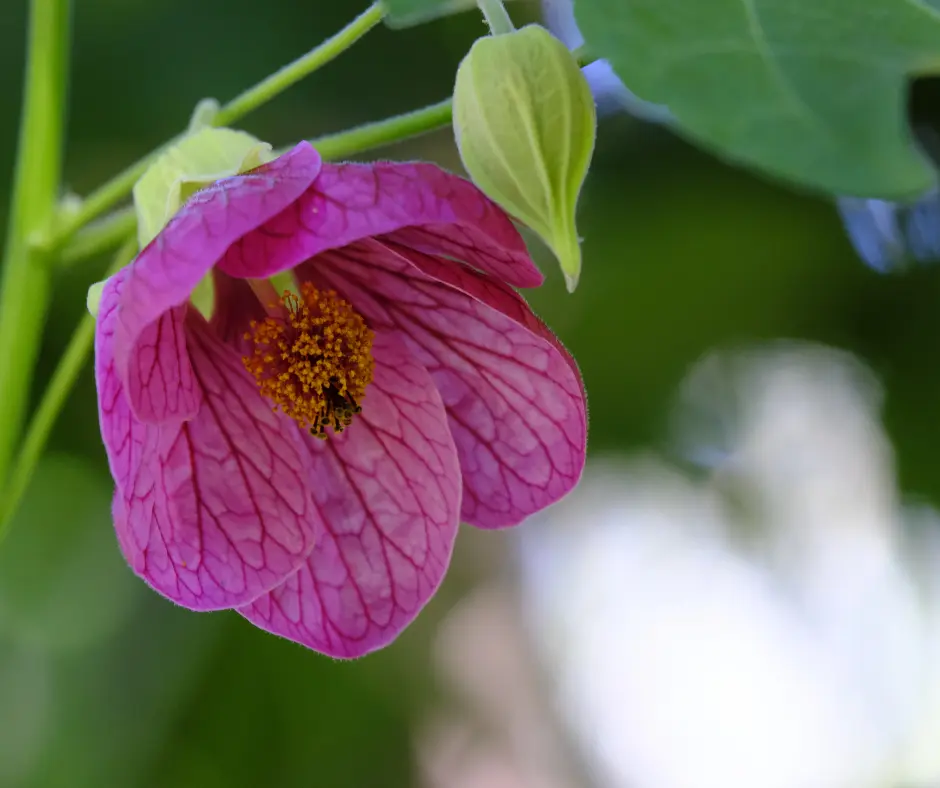
These days, hardly anyone refers to an area of their living space as “the parlor.” It wasn’t that way in Victorian times, when every respectable house had a parlor. And those parlors were often filled with upholstered furniture and an abundance of knickknacks, accented with sturdy houseplants. Among the most popular of those plants was the parlor maple, more properly Abutilon x hybridum, which boasted colorful, hollyhock-like blossoms and attractive dark green palmate leaves.
Enduring Popularity
Parlor maples are with us still and loved by indoor and outdoor plant enthusiasts and are sometimes also known as “Chinese lanterns,” “flowering maple,” or even “Indian maple”. The “x hybridum” in the Latin name of the most common varieties means that the plants in question are the result of successful crosses between two or more abutilon species, many of which are native to South America. As with humans, ancestry can be complicated.
A Maple by Any Other Name…
What is not complicated is the enduring allure of these plants. The species and hybrids are classified as small, frost-tender subshrubs, which simply means that they combine woody stems with relatively small stature—usually two to four feet-tall when grown indoors. The plants are only hardy outdoors in USDA plant hardiness zones 9 and 10, but parlor maple enthusiasts who live in cold-winter climates can easily grow them as houseplants, keeping their size at reasonable levels by pruning regularly and conquering the urge to repot in ever larger containers.
The “maple” part of the parlor maple name comes from the fact that the plants’ lobed leaves resemble maple foliage. The resemblance ends there. Maples are part of the Acer genus and parlor maples belong to the large Malvaceae or mallow family that is also home to hollyhocks, hibiscus, okra and cotton. Like many mallows, abutilon flowers sport five large petals each, except in double flowered forms, like the frilly pink ‘Victorian Lady’. Those petals surround a prominent central staminal column that is also characteristic of most other common mallows.
From Bell to Trumpet
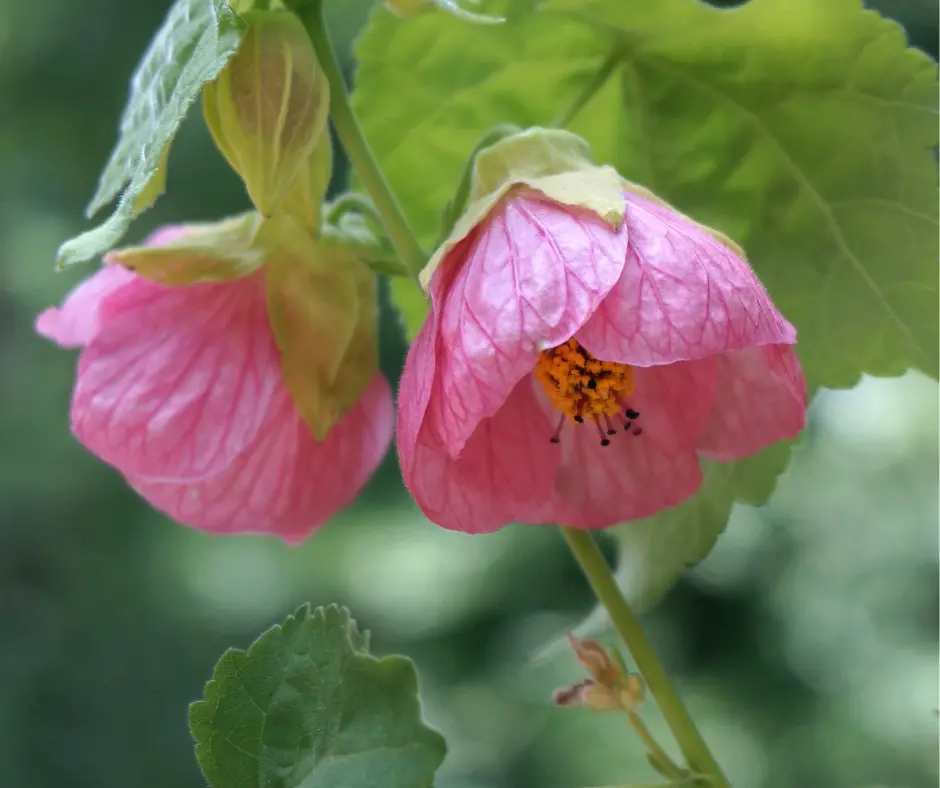
When the Victorians grew parlor maples in their parlors or conservatories, the flowers were bell-shaped and pendulous, in shades of yellow, orange, pink or red. That situation persisted, and even as recently as 1997, when celebrated plantsmen Roger Phillips and Martyn Rix produced their lavishly illustrated book, Indoor and Greenhouse Plants, all the parlor maples shown had bell-shaped blooms. Now the story has changed. Some modern plants, like the flashy ‘Red Tiger’ with petals feathered in yellow and red, still bear flowers in that shape, but professional breeders and highly skilled amateurs, like the prolific Staten Island artist/designer Sage Reynolds, have produced many stellar varieties with outward-facing flowers, including the lovely ‘Candy Cane’, with its red-veined, blushing pink flowers and top height of two to four feet.
Colors and Sizes Fit Modern Needs
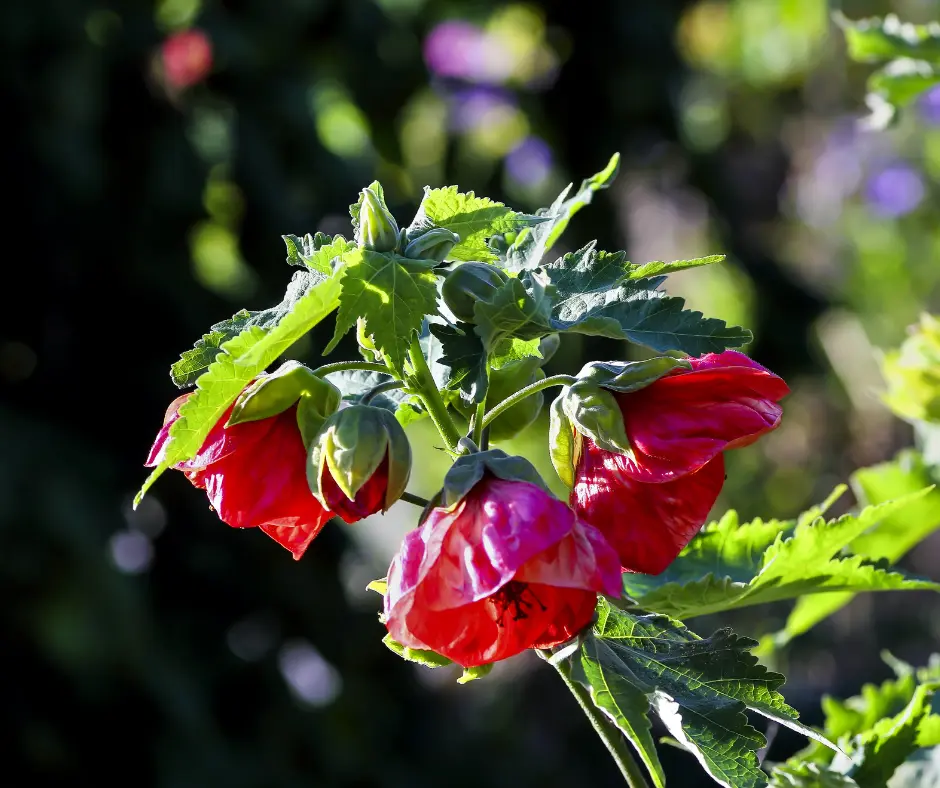
The expanded color range of modern hybrids includes peachy shades as well as bicolor. Some varieties, like the Thompsonii variety of Abutilon pictum, feature leaves variegated in cream splotches.
As with other popular plants, abutilon varieties are sometimes marketed in series. This is true of the “red tiger” abutilons, which in addition to ‘Red Tiger’ includes peachy orange pink ‘Tiger Lily’.
Breeders have also answered the current demand for smaller varieties, introducing cultivars like ‘Little Sunshine’, with yellow blooms and a maximum height of two feet. Even the smallest parlor—or apartment kitchen—can accommodate abutilons in the ‘Bella’ series that grow to only 15 inches.
Cold Climate Care
Those of us in cold winter climates can keep our parlor maples indoors in the late fall, winter and early spring, before giving them summer vacations outside if living arrangements permit it. Indoors, the plants need bright, south-facing windowsills, if possible, or the brightest available windowsill if windowsill space is limited. Do not position them near heat sources and do provide regular moisture, as dryness is anathema to abutilons. The plants may flower in winter, especially if they are modern hybrids, but growth and flowering generally slows down during the colder, darker months. This may be a relief, as we humans tend to slow down at the same time.
The Leggy Maple Dilemma
Sometimes, when the plants do not receive enough light or the tips are not pinched early on to induce branching, they become “leggy”, with lots of stem growth, but fewer leaves and flowers. The answer to this problem is to cut the plant back hard—by one or two-thirds. This can be done just before your abutilon comes indoors for the winter or in spring before new growth starts. If light is the problem indoors, reposition containers in sunnier spots or add supplemental light.
Outdoor Vacation
When and if the plants move outdoors, they should be given light shade at first and then moved to brighter locations. The containers can fill “holes” in beds and borders, something the Victorians did all the time, but will also look good dropped into window boxes or positioned on porches or patios. Feed with houseplant fertilizer, diluted and administered according to manufacturer’s directions.
Seeding the Maples
Garden centers and online vendors carry a host of hybrid abutilon varieties, but the plants can also be grown from seed, which is a good way to get lots of abutilons for a relatively small price. ‘Bella Mix’ is one seed strain that produces a mix of different colors. If you choose to grow from seed, plant the seeds according to package directions in a rich potting medium, like Fafard Natural and Organic Potting Mix.
Luring People and Pollinators
If you are lucky, your outdoor abutilons might attract hummingbirds, which make both plants and pollinators seem magical. They will definitely attract attention from humans.

About Elisabeth Ginsburg
Born into a gardening family, Elisabeth Ginsburg grew her first plants as a young child. Her hands-on experiences range from container gardening on a Missouri balcony to mixed borders in the New Jersey suburbs and vacation gardening in Central New York State. She has studied horticulture at the New York Botanical Garden and elsewhere and has also written about gardens, landscape history and ecology for years in traditional and online publications including The New York Times Sunday “Cuttings” column, the Times Regional Weeklies, Horticulture, Garden Design, Flower & Garden, The Christian Science Monitor and many others. Her “Gardener’s Apprentice” weekly column appears in papers belonging to the Worrall chain of suburban northern and central New Jersey weekly newspapers and online at http://www.gardenersapprentice.com. She and her feline “garden supervisors” live in northern New Jersey.