
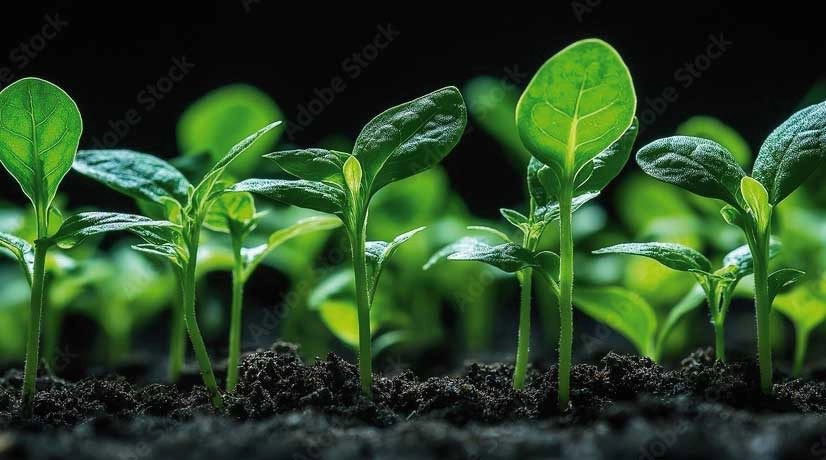
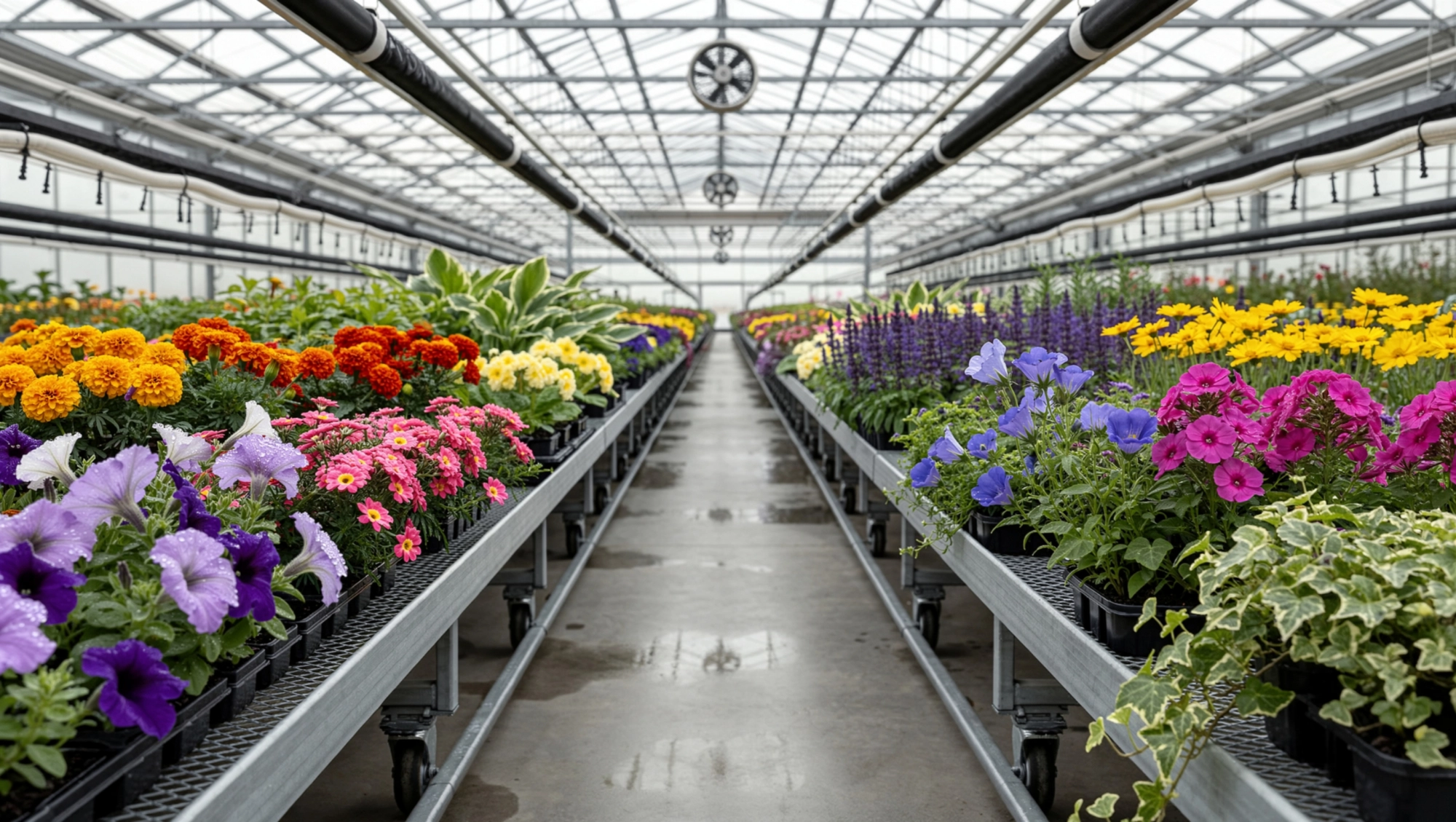
Choosing the wrong growing medium can cost a nursery operation weeks of production time and significant input expense. Nearly all container-grown plants today are planted in engineered, soilless growing media, not field soil. Getting the substrate right from the start is one of the most consequential decisions a grower makes.
Introduction
Growing media for nursery container production is a specialized field built on decades of horticultural science. Unlike field soil, container substrates are engineered to deliver precise combinations of aeration, drainage and moisture retention within a confined volume.
The global growing media market reached $8.6 billion in 2025, reflecting how central these engineered substrates have become to modern commercial horticulture. Demand continues to rise alongside container nursery production volumes.
For professional growers, understanding what goes into a quality growing medium, and why each component matters, is the foundation of consistent crop performance. Substrate decisions affect root health, irrigation efficiency, fertility management and ultimately the marketability of finished plants.
Growing Media vs. Soil: What Sets Them Apart
Field soil and container growing media may look similar, but they behave very differently under production conditions. According to University of Arkansas Cooperative Extension, potting media is composed of approximately 15% solids and 85% pores, while field soil is roughly 50% solids and 50% pores.
That structural gap explains why field soil fails in containers:
- Aeration: Field soil compacts in containers, cutting off oxygen to roots and creating anaerobic conditions
- Drainage: Dense soil structure retains excess water, raising the risk of root disease
- Pathogen load: Field soils carry weed seeds, fungi and bacteria that require fumigation or pasteurization before use
- Water efficiency: Research from Wageningen University indicates soilless substrate cultivation combined with drainage recirculation can reduce water use by approximately 50% and nutrient use by approximately 60% compared to soil-based production, according to IndexBox
- Consistency: Engineered growing media delivers repeatable physical and chemical properties across production cycles
The Four Core Components of a Quality Growing Medium
A quality growing medium must fulfill four core functional roles: organic base, drainage, aeration and moisture management. These components work together to hit target performance ranges, which is why most commercial mixes combine two or more materials to balance all four functions within a single formulated container substrate.
Organic Base Materials
Canadian sphagnum peat moss is the most widely used organic base in commercial greenhouse and nursery production. Most commercial greenhouse media contains 30 to 60 percent peat moss, and sphagnum peat can absorb seven times its own weight in water, according to University of Arkansas Extension.
Pine bark serves as the primary organic base in outdoor container nursery mixes, comprising 80% to 100% by volume in many formulations. A common professional recipe calls for 80% pine bark, 10% peat and 10% sand, as noted by Oklahoma State University Extension. Both materials provide structure, support microbial activity and contribute to the substrate’s cation exchange capacity.
Drainage, Aeration, and Moisture Amendments
Perlite is a sterile, volcanic mineral that resists decomposition and improves drainage and aeration in growing media. It holds 14.5% of the plant growing media market share, valued at $0.61 billion in 2025, according to DataIntelo.
Vermiculite serves the opposite function, contributing superior water retention and nutrient holding. It constitutes 13.8% of cultivation substrate material demand, valued at $1.07 billion in 2025 and growing at a 5.2% CAGR, according to DataIntelo. Standard professional formulations include a 2:1:1 sphagnum peat:perlite ratio for greenhouse crops, as documented by UMass Amherst’s Greenhouse BMP Manual.
Types of Growing Media Used in Commercial Nursery Production
Commercial nursery operations use a range of soilless growing media, and the substrate options available to growers have expanded considerably in recent years. Nearly all of the estimated 8.5 to 9 billion containerized plants produced globally each year, according to IndexBox, are grown in these soilless systems.
Peat-Based vs. Bark-Based Mixes
Peat-based growing media dominate the substrate market, holding a 65% to 75% volume share for container nursery and propagation, according to IndexBox. Studies confirm that mixes with at least 50% peat consistently outperform alternatives in growth and nutrient uptake, as reported in Frontiers in Horticulture.
Bark-based mixes are the standard for outdoor container nursery production, valued for their physical stability and drainage performance. Beyond these two categories, more than 200 commercially available peat-free formulations are currently marketed in Europe alone, including coir fiber, wood fiber, composted green waste, biochar-enhanced blends and digestate-based substrates, according to Frontiers in Horticulture. A 2025 study published in HortScience also found that hemp hurd (Cannabis sativa) may substitute for approximately 30% of the peat portion in a standard peat:vermiculite medium, according to ResearchGate.
Physical Properties That Drive Container Performance
Physical properties are considered more important than chemical properties in container media because they cannot be easily changed after ingredients are placed in a container, according to University of Tennessee Extension. Selecting the right substrate before production begins is far more effective than trying to correct it afterward.
Industry-standard normal ranges for container substrate physical properties, established by NC State University, include total porosity of 50% to 85%, air space of 10% to 30%, container capacity of 45% to 65% and available water of 25% to 35%.
Air-Filled Porosity and Drainage
Air-filled porosity (AFP) is the percentage of substrate volume occupied by air after drainage. A container mix should contain 20% to 25% air by volume after drainage, since oxygen stress conditions are likely to develop at air space values lower than 10%, according to UC ANR.
Container height plays a significant role. Sun Gro Horticulture technical resources document that a 648-tray using a 1:1 peat:vermiculite mix yields only 0.5% AFP, while a 6-inch pot yields 20% AFP. The taller the container, the greater the drainage and the higher the air-filled porosity.
Water-Holding Capacity and Container Capacity
Water-holding capacity describes how much moisture a substrate retains after free drainage. Real-world comparisons show that a 1-gallon container of peat-sand mix held 430 ml of water readily available to plants, while the same container of bark-sand mix held only 187 ml, less than half, due to the larger pore structure of bark, according to UC ANR.
Measured data from Rutgers Cooperative Extension confirms the range across commercial mixes: a peat-vermiculite mix reached 94% total porosity with 60% available water, while a UC mix measured 73% total porosity with 44% available water. These differences directly affect irrigation scheduling and crop uniformity.
Chemical Properties: pH and EC in Nursery Substrates
pH and electrical conductivity (EC) are the two chemical properties that govern nutrient availability and plant health in container growing media. Because both directly affect crop outcomes, they require active monitoring throughout production and are central to managing nursery substrate performance.
Key benchmarks for nursery substrate chemistry include:
- Ideal pH range: 5.2 to 6.2 for most soilless substrates; most conifers perform best around pH 5.5, per NC State University Extension
- Optimal EC range: 0.5 mS/cm to 2.0 mS/cm for container nursery crops; fresh media without fertilizers should test below 750 µmho/cm, per NC State University Extension
- Peat moss pH: Sphagnum peat has a naturally low pH of 3.0 to 4.0, requiring 14 to 35 pounds of dolomitic limestone per cubic yard to reach crop-appropriate levels, per Purdue University Extension
- pH buffering: In peat and bark growing media, a decrease of up to one pH unit in a week can sometimes occur in commercial crops, per University of Arkansas Extension
- CEC by material: Sphagnum peat CEC ranges from 90 to 250 meq/100g; vermiculite CEC is 100 to 150 meq/100g; perlite CEC is only 1 to 5 meq/100g, per USDA Forest Service research
Choosing the Right Growing Media for Your Nursery Crops
Choosing the right growing media is one of the most consequential decisions a nursery grower makes, and substrate selection is a significant driver of industry performance. Nursery stock is the largest U.S. horticulture category, generating $5.34 billion in sales in 2024, a 17% increase since 2019, according to the USDA NASS 2024 Census of Horticultural Specialties.
Growers evaluating growing media for nursery container production should weigh these factors:
- Crop type and stage: A medium suited for germination may be entirely unsuitable for long-duration production, per Cornell University
- Container size and height: Shallow containers remain proportionally wetter than tall containers filled with the same substrate
- Production duration: Longer production cycles demand greater physical stability and pH buffering capacity
- Irrigation frequency: High-frequency irrigation programs favor mixes with higher AFP; lower-frequency programs benefit from greater water-holding capacity
- Fertility program: Low-CEC materials like perlite require more frequent fertigation; high-CEC materials like peat and vermiculite hold nutrients longer
- Consistency: The 2025 Growing Media Market Report from Greenhouse Management found that most growers prefer standard mixes for their consistency, per Greenhouse Management
Sustainability and Alternative Materials in US Nursery Production
Sustainability pressures are reshaping how professional growers source and formulate growing media, driven by input costs, supply availability and environmental stewardship. These forces are pushing change across the entire industry, prompting growers to evaluate alternative materials and more sustainable production practices.
Key developments shaping the landscape include:
- Peat reduction in practice: UK peat usage in professional growing media fell to 21.8% in 2025, down from 56% in 2021, a more than 60% reduction in four years, per the HTA Growers Growing Media Usage Survey
- Substrate stratification: Layering low-peat and peat-rich materials within the same container can reduce peat use by 50% without sacrificing plant growth or quality, per ASHS research
- Coir expansion: Pelemix increased coir exports by 16%, reaching 700,000 tons annually in 2025, per Greenhouse Grower
- Bark-based growth: Global bark-based growing media are expected to grow at a CAGR of 4.6% from 2026 to 2035, per IndexBox
- Cost reality: Transitioning from peat to renewable mediums has increased input costs by approximately 22% for growers globally, per Greenhouse Grower
- US research investment: In fall 2024, a team of scientists received a five-year USDA Specialty Crop Research Initiative grant for the Soilless Substrate Science program, focused on securing the future of soilless growing media in the U.S., per Greenhouse Management
Sun Gro’s commitment to sustainability extends from product innovation to responsible sourcing. By working with local and global suppliers, Sun Gro supports quality growing solutions while helping protect the communities and ecosystems connected to its supply chain.
Conclusion
Growing media for nursery container production is a science-driven discipline where substrate selection directly shapes crop quality, resource efficiency and production economics. Physical properties, chemical balance and ingredient composition all interact in ways that field soil simply cannot replicate in a container environment.
Professional growers who invest time in understanding their substrate options, and who work with science-driven growing media partners, are better positioned to manage input costs, maintain crop consistency and adapt to evolving sustainability expectations. Talk with a Sun Gro Grower Specialist to find the right mix for your crop.
Frequently Asked Questions
How much does growing media cost for nursery container production in the United States?
Growing media costs vary by formulation, volume and region across the United States. U.S. horticultural operations spent $4.042 billion on seeds, growing media and containers in 2024, according to the USDA NASS Census of Horticultural Specialties. Peat-free alternatives cost on average 21% more than peat-based formulations in comparable markets. A 500-acre outdoor container production nursery uses approximately 17,500 cubic yards of peat annually, illustrating how substrate decisions carry significant economic weight at scale.
What growing media standards apply to commercial nursery operations in the United States?
The United States had 23,060 horticultural specialty operations in 2024, with total horticultural sales of $18.3 billion, according to the USDA NASS 2024 Census. Professional standards for container substrates are guided by university extension programs and industry benchmarks, including NC State University’s widely referenced physical property ranges. Most commercial operations follow formulations developed and validated through cooperative extension research, with grower specialists and growing media manufacturers providing crop-specific guidance.
What physical properties should growers measure in a container substrate?
The most critical physical properties are total porosity, air-filled porosity, container capacity and available water. Industry benchmarks from NC State University set total porosity at 50% to 85% and air space at 10% to 30%. At container capacity, at least 40% of total media volume should be filled with water after full drainage, while at least 20% to 25% of total volume should remain as air space for root respiration, according to UC ANR.
How do peat-based mixes compare to peat-free alternatives for nursery production?
Peat-based mixes continue to outperform alternatives in most nursery production scenarios. All peat-free mixtures tested in a 2025 Frontiers in Horticulture study showed reduced maximum water-holding capacity, increased density and greater nitrogen immobilization compared to peat, according to Frontiers in Horticulture. That said, 29% of growers are already shifting from peat-based mediums to organic substitutes like coir and composted bark, and about 46% are moving toward renewable materials across new product introductions, according to DataIntelo.
How should growers get started selecting a growing medium for a new nursery crop?
Start by defining the crop type, production stage, container size and irrigation program before evaluating any substrate. Since 2005, more research has been conducted on wood-based components than any other alternative material, per University of Kentucky Cooperative Extension, giving growers a growing evidence base for new formulations. Working with a grower specialist to match substrate properties to specific crop requirements reduces the risk of costly mid-cycle corrections. Contact Customer Care at 1-800-PEAT-MOSS or learn more at sungro.com.