

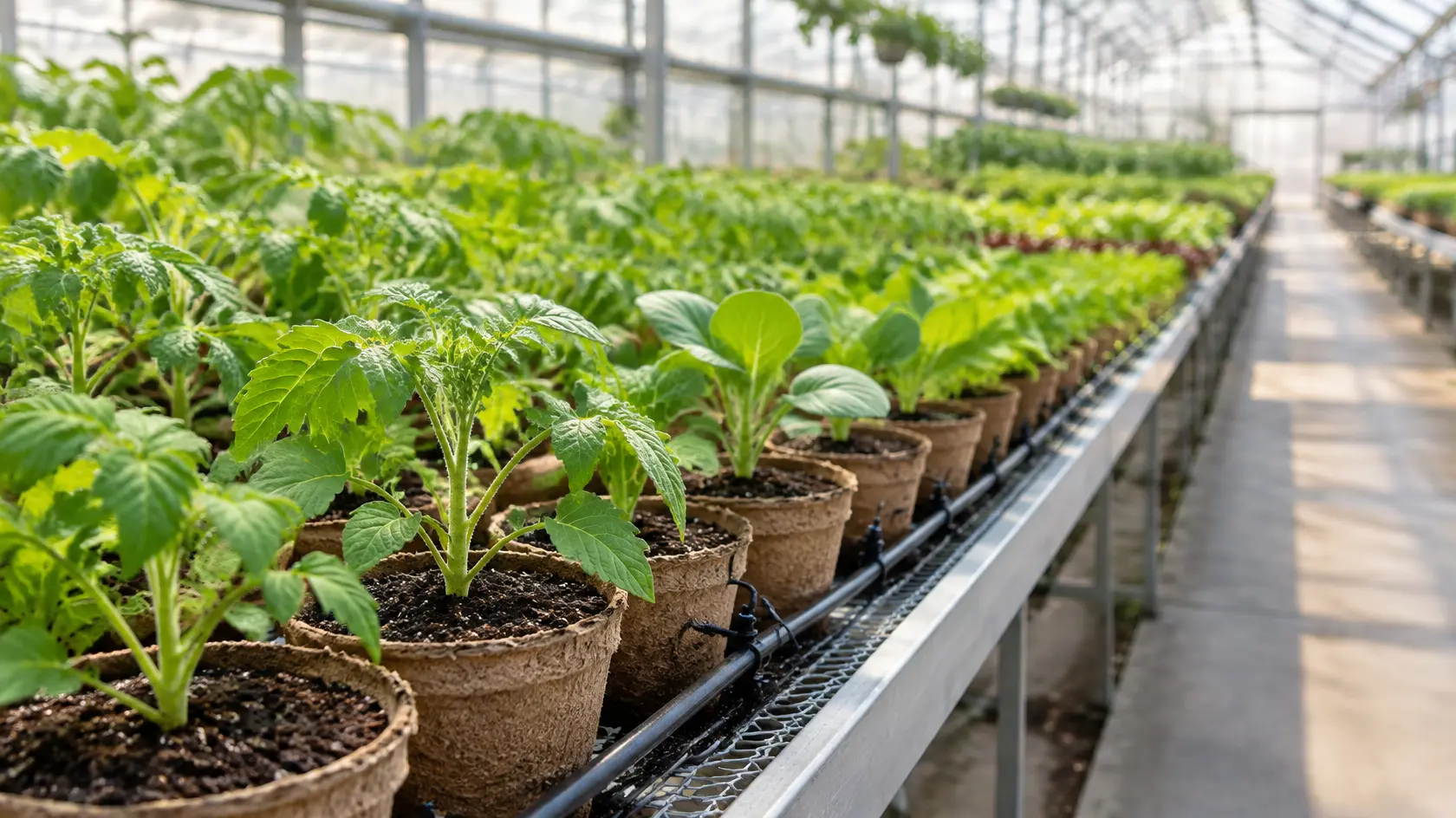
Professional growers across the United States face mounting pressure to produce more while using less. The scale of that challenge is significant, and the stakes for getting it wrong are real. Understanding how responsible growing programs deliver measurable results helps growers make smarter decisions about their operations.
Introduction
Responsible growing is no longer a niche concern for a handful of forward-thinking operations. It has become a defining factor in how professional growers compete, retain customers and manage long-term risk.
The greenhouse horticulture market was valued at USD $36.6 billion in 2025, according to IMARC Group, with sustainability practices identified as a primary growth driver. That scale signals a fundamental shift in what the industry expects from its growers.
How Company X Achieved Responsible Growing Results is a question worth examining carefully. The answer points to a structured approach built on environmental accountability, ethical sourcing, meaningful partnerships and measurable outcomes that growers at any scale can learn from.
What Responsible Growing Means for Professional Horticulture
Responsible growing means connecting environmental stewardship with practical production decisions across every level of a professional operation. It is not a single practice but a framework that professional growers apply across water use, growing media selection, pest management and supply chain sourcing, making it a discipline that shapes the entire business.
The most commonly adopted practices among horticulture growers reflect where the industry is focusing its efforts:
Recycling programs: Adopted by 58% of growers as a foundational step toward reducing operational waste
Composting systems: Used by 55% of growers to return organic material to productive use
Fertilizer and runoff mitigation: Practiced by 50% of growers to protect water quality and reduce input costs
Formal sustainability planning: Only 18% of growers currently have a plan in place, though 29% are actively considering one, according to Sun Gro Horticulture
Yield-conscious resource reduction: Research shows regenerative approaches can match conventional yields while using significantly fewer inputs
Solving Real Problems: The Challenges Company X Set Out to Fix
Company X built its responsible growing program to solve specific operational problems that threatened profitability, supply continuity and long-term viability. Responsible growing programs do not emerge from idealism alone. Company X identified three core challenge areas and structured its entire program around addressing each one directly.
Environmental Responsibility in Growing Media Selection
Growing media choices carry real environmental consequences. Natural gas-heated glasshouses in temperate climates account for up to 60% of a nursery’s total emissions, and energy costs represent 15 to 25% of total production expenditures in commercial greenhouse operations, according to Sun Gro Horticulture.
Selecting growing media that supports energy-efficient production, responsible peat sourcing and reduced input dependency is not a peripheral concern. It is a direct lever on operating costs and environmental performance.
Ethical Sourcing Across the Supply Chain
Plastic waste in professional horticulture has reached a scale that demands attention. An estimated 500 million plastic plant pots, trays and flats are produced annually in the United States, generating roughly 350 million pounds of plastic waste, according to Sun Gro Horticulture.
Ethical sourcing means evaluating suppliers not just on price but on their environmental and labor practices. For growing media specifically, it means prioritizing suppliers who practice responsible peatland management and maintain transparent supply chains from harvest to delivery.
Collaboration and Partnerships That Drove Results
Collaboration and partnerships drove Company X’s responsible growing results by accelerating progress and sharing the cost of innovation. No single operation achieves these outcomes in isolation. Partnerships with industry associations, research institutions and community organizations made it possible to move faster and further than the company could have managed independently.
Industry Association Partnerships
Sector-wide collaboration produces outcomes that individual growers cannot achieve alone. British Berry Growers’ partnership covering 23 growers and 56% of UK berry production delivered clear results: 65% of participating growers reduced overall water usage by an average of almost 16%, according to the British Berry Growers Sustainability Report 2025.
“65% of participating growers reduced overall water usage by an average of almost 16%, while spending on biological control agents for raspberries rose 292% between 2021 and 2024.” – British Berry Growers
Community Engagement and Charitable Partnerships
Corporate-NGO collaboration is not just good practice. It delivers measurable business value. Research cited by 360MatchPro shows 97% of companies and 92% of NGOs acknowledge deriving tangible benefits from these partnerships.
Community engagement programs connect growing operations to the people they serve. They build brand trust, support local economies and create goodwill that strengthens long-term customer relationships. For professional growers, charitable partnerships often open doors to grant funding, shared infrastructure and co-marketing opportunities that would otherwise be out of reach.
Employee Engagement: Building a Culture of Responsibility
Building a culture of responsibility means treating employee engagement as a retention and performance strategy, not a soft benefit. Responsible growing programs succeed or fail based on the people who implement them. When employees understand and own the mission, the program gains the consistent execution it needs to deliver real results.
Ethical Business Practices in Daily Operations
Ethical business practices shape how employees experience their work every day. According to Benevity, 83% of employees say they would reconsider their jobs if their employer failed to uphold Corporate Social Responsibility values.
For professional growers, ethical daily operations include fair labor standards, transparent communication and consistent application of environmental policies. These practices signal to employees that the organization’s values are real, not aspirational.
Inspiring Change Beyond the Greenhouse
Employees who see their employer making a genuine difference become advocates. Newer employees who participate in corporate purpose programs are 52% less likely to leave their company, according to Benevity.
Growers who connect their teams to the broader impact of responsible growing, whether through community planting programs, educational outreach or supplier transparency initiatives, build a workforce that takes pride in its work.
Strategic CSR: Aligning Purpose with Profits
Responsible growing is a business strategy, not a cost center. According to Benevity, 92% of CSR leaders say they invest in responsible growing and sustainability because it is good for business, and 88% say their impact strategies are helping future-proof their organizations.
Properly implemented CSR practices can boost firm value by as much as 36% and profitability by as much as 21%, according to the Project ROI 2025 report cited by Benevity. Aligning purpose with business goals turns responsible growing from a compliance exercise into a competitive advantage.
Implementing Sustainable Practices at Scale
Scaling responsible growing requires systems, not just intentions. Companies that use social feeds to showcase CSR impact saw 89% higher employee engagement, while those using digital tools for giving saw a 90% increase in participation volume.
For growing operations, scaling means standardizing practices across facilities, training staff consistently and using data to track progress. Sun Gro Horticulture, as North America’s largest producer of horticultural-grade peat and peat-based growing mixes, operates 22 facilities across North America, a network that requires exactly this kind of systematic approach to responsible practice.
Measuring Impact: How Company X Tracked Responsible Growing Outcomes
Company X tracked responsible growing outcomes by measuring program performance at every stage, turning good intentions into documented progress. Responsible growing programs only improve when they are measured. That data gave Company X’s growers the evidence they needed to justify continued investment and refine their approach over time.
Key Metrics Company X Tracked
Measurement frameworks in professional horticulture span water efficiency, waste diversion and energy reduction. According to the ACCP CSR Insights Report, 66% of corporate social impact teams report increased demand to measure impact, with 80% now collecting output and outcome data.
Key metrics that responsible growing programs track include:
Water use reduction: Measurable decreases in cubic meters consumed per production cycle
Waste diversion rates: Percentage of waste stream recycled or composted rather than sent to landfill
Energy consumption: Kilowatt-hours saved through efficiency upgrades and renewable energy adoption
Plastic recovery: Volume of pots, trays and flats returned or recycled rather than discarded
Input efficiency: Reductions in synthetic fertilizer and pesticide use per unit of production
“80% of corporate social impact teams now collect output and outcome data, and 76% track program activities.” – ACCP
Conclusion
Responsible growing is not a destination. It is a continuous practice built on clear goals, honest measurement and a willingness to adapt. The growers who make the most progress are those who treat environmental and ethical commitments as operational priorities, not afterthoughts.
For professional horticulturists in the United States, the path forward is clearer than it has ever been. Science-driven growing media, responsible sourcing and structured employee engagement programs give growers the tools to build operations that perform well today and remain viable for years to come.
Frequently Asked Questions
How much does implementing a responsible growing program cost in the United States?
Costs vary depending on program scope and facility size. Many growers start with low-cost practices like composting and recycling before investing in water recirculation or energy efficiency upgrades. In the United States, grant programs through industry associations and state agricultural agencies can offset initial costs significantly. Operations that track input savings often find that responsible growing programs pay for themselves within two to three production seasons.
How do responsible growing practices affect growers across different U.S. regions?
Regional climate and water availability shape which practices deliver the greatest return. Growers in water-stressed regions of the western United States typically prioritize recirculation systems and drought-tolerant growing media. Those in temperate regions often focus on energy efficiency and plastic waste reduction. Sun Gro Horticulture’s network of 22 facilities across North America supports growers with region-specific growing media formulations and technical guidance tailored to local conditions.
What growing media characteristics support responsible production?
Growing media that supports responsible production balances water retention, aeration and input efficiency. Canadian sphagnum peat moss, coir, bark and perlite each contribute specific physical properties that reduce the need for supplemental irrigation and fertilizer. Sun Gro’s science-driven blends are developed by professional horticulturists to deliver consistent performance across a range of crops and production systems, reducing the trial-and-error that wastes inputs and time.
How does responsible growing compare to conventional production for yield outcomes?
Responsible growing does not require sacrificing productivity. A 2025 multi-country study found that regenerative farmers achieved just 1% lower yields compared to conventional production. IPM adoption across 85 projects in 24 countries produced a mean yield increase of 40.9% combined with a 30.7% decline in pesticide use, according to Sun Gro Horticulture. Results will vary by crop type and grower practices.
How long does it take to implement a responsible growing program?
Most growers can implement their first sustainable practice within a single growing season. Building a full program, including water efficiency upgrades, waste tracking and supplier evaluation, typically takes two to three seasons. Measurable input savings usually appear within the first one to two production cycles, according to Sun Gro Horticulture. Starting with one high-impact area and expanding from there is the most practical approach for most operations.