
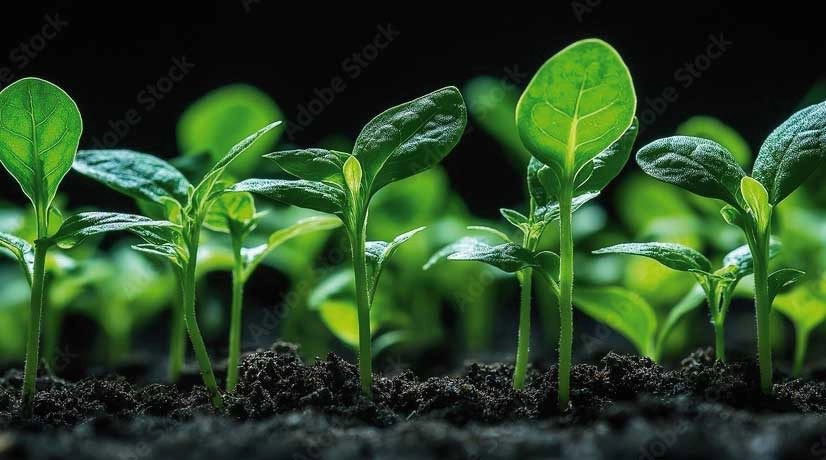
Choosing the wrong growing media can quietly undermine an entire greenhouse season. With greenhouse yields running up to 446% higher than field production, the substrate decision carries real weight. Getting it right starts with understanding what each soil type actually does.
Introduction
Growing media selection is one of the most consequential choices a professional grower makes. The substrate under your crop controls drainage, aeration, pH stability, nutrient availability and disease pressure, all at once.
Comparing Soil Types for Greenhouse Growth
Natural soil types range from sandy to clay to loamy, and each performs very differently inside a controlled greenhouse environment. A medium that works well in an open field can create serious problems in a closed production system. The right choice depends on crop type, production system and the amendments available to correct a medium’s natural limitations.
Why Growing Media Choice Defines Greenhouse Success
Growing media selection is not just a starting point. It shapes every outcome that follows, from germination rate to final yield.
Key reasons growing media choice defines greenhouse performance:
- pH stability: According to University of Georgia Extension, in perhaps 50% of all crop nutritional problems, media pH was not maintained in the desired range for that crop.
- Market scale: The greenhouse soil market was valued at USD $4.94 billion in 2025, projected to reach $6.08 billion by 2029, driven by demand for specialized substrates and water conservation, according to Research and Markets.
- Volume intensity: Commercial greenhouses consume approximately 18.2 million cubic meters of growing media annually, representing 52.8% of global growing media volume, per DataIntelo.
- Soil dominance: Soil-based media held a 58.2% share of the plant growing media market in 2025, while soilless alternatives account for the remaining 41.8%.
- Silent failure risk: The wrong substrate can silently undermine an entire production cycle before visible symptoms appear.
The Six Soil Types: A Greenhouse Performance Overview
Six main soil types are recognized across temperate growing regions: clay, sandy, silt, chalk, peat and loam. Each has a distinct pH range, drainage profile and nutrient level that determines its greenhouse suitability.
Sandy and Silty Soil
Sandy soil drains quickly and warms fast, but it struggles to hold nutrients or moisture. According to Frontiers in Soil Science, sandy soil regions may require 7 to 17 times more water than needed to produce maximum yields, and 20 to 80% of applied nutrients can leach beyond the root zone.
Silty soil sits between sandy and clay in texture. It holds moisture better than sand and offers reasonable fertility, but it compacts easily under irrigation pressure, which restricts root development in greenhouse beds.
Clay and Chalky Soil
Clay soil contains more than 30% fine particles, which creates waterlogging and poor aeration. It offers high mineral content and nutrient richness, but drainage problems make it difficult for most greenhouse crops without significant amendment.
Chalky soil runs at pH 7.0 to 8.0 and covers roughly 5% of gardens in temperate regions. According to Greenhouse Stores UK, it locks up iron and manganese, causing stunted, yellowing plants. Raised beds with ericaceous compost are the standard correction.
Peat and Loamy Soil
Peat soil runs at pH 4.0 to 5.5, offers excellent aeration and has a natural absence of pathogens, making it well-suited for seed starting. Peat-based media held the largest type share at 31.4% of the global growing media market in 2025, valued at approximately $2.7 billion, per Precision Business Insights.
Loamy soil is the benchmark medium. Its balanced structure of roughly 40% sand, 40% silt and 20% clay delivers moisture retention, drainage and fertility suited to nearly every crop. A 2025 study cited by Frontiers in Agronomy found loamy soil increases Cannabis sativa growth 2.5-fold compared to sandy soil.
Side-by-Side: How Soil Types Compare for Greenhouse Use
Soil composition directly drives greenhouse output. Research confirms that pH, electrical conductivity and organic matter all have measurable relationships with crop yield.
“Soil pH shows a positive correlation with greenhouse crop yield (r = 0.777), while electrical conductivity shows a strong negative relationship (r = -0.824).” Frontiers in Agronomy
What Soil Makes Plants Grow Faster in a Greenhouse?
Loamy soil consistently outperforms other natural soil types for speed and yield in greenhouse settings. Its balanced structure supports root development, nutrient uptake and drainage simultaneously.
Continuous cropping in unchanged greenhouse soil beds can result in 30 to 40% yield losses in tomato production within 10 years, and cucumber yield dropped by 41% after just 4 years of continuous monocropping, according to ScienceDirect. Rotation, amendment and periodic media replacement are essential for sustained performance.
Identifying Your Soil Type Before You Grow
Knowing your starting point is essential. Testing growing media before planting prevents costly corrections mid-season.
Do-It-Yourself Field Tests
Simple field tests give growers a fast read on soil type without laboratory costs. Three tests cover the basics:
- Jar test: Separates sand, silt and clay by settling rate in water.
- Ribbon test: Checks clay content by rolling moist soil between fingers.
- Drainage test: Measures how quickly water moves through a sample
For pH, inexpensive test kits provide a working estimate. The desirable pH range for most greenhouse crops is 5.5 to 6.5, and acceptable electrical conductivity ranges from 750 to 3,500 microsiemens per centimeter, per Oklahoma State University Extension.
Professional Laboratory Analysis
Laboratory analysis delivers precise data on pH, EC, nutrient levels and cation exchange capacity. According to Oklahoma State University Extension, soil testing is the most common method greenhouse operators use to determine nutritional status, and growing media should be tested at least monthly.
Correcting a deficiency or toxicity in greenhouse media can take 2 to 4 weeks, per UMass Amherst Extension. For short-season crops like lettuce and herbs, that delay can cost an entire production cycle. Early identification is not optional.
Amending Soil Types for Better Greenhouse Performance
No natural soil type is perfect for greenhouse production straight from the ground. Amendment is the standard practice for professional growers working with native soil.
Effective amendments by soil challenge:
- Sandy soil: Biochar application increased grain yield by 51.6%, aboveground biomass by 67.4% and soil organic carbon by 74.2%, while reducing nutrient leaching by 21 to 78%, per Frontiers in Soil Science.
- Clay soil: Adding perlite and coarse organic matter improves drainage and aeration. Perlite-based amendments enhance crop yields by 18 to 26% while reducing water consumption by 35 to 40%, according to IndexBox.
- Compost addition: A meta-analysis of 1,657 observations from 204 published studies found compost alone increased crop yield by 45.1%, while compost combined with NPK fertilizer boosted yields by 62.6%, per Frontiers in Sustainable Food Systems.
- Poultry manure: Among organic inputs, poultry manure had the greatest effect on greenhouse crop yield, increasing output by 48.1% and soil microbial biomass carbon by 123.3%, per Nature Scientific Reports.
- Raised bed formula: The recommended greenhouse raised-bed mix for overcoming poor native soil is 40% topsoil, 40% compost and 20% perlite or grit at a height of 200 to 300 mm.
“Among organic inputs, poultry manure had the greatest effect on greenhouse crop yield, increasing output by 48.1% and soil microbial biomass carbon by 123.3%.” Nature Scientific Reports
Soilless Mixes: When to Skip Natural Soil Entirely
Some production scenarios call for leaving natural soil behind entirely. Soilless growing media offers consistency, disease control and performance that native soil types cannot match at commercial scale.
Key reasons professional growers choose soilless systems:
- Yield gains: Multiple peer-reviewed studies found soilless farming increased yield by 20 to 30% compared to traditional farming, with lettuce reaching 212% higher yield and tomato 188% higher in hydroponic systems, per Frontiers in Plant Science.
- Water efficiency: Soilless systems use 70 to 90% less water than soil-based methods, according to WisPaper Research.
- Commercial adoption: In large greenhouse complexes in developed countries, 95% of greenhouse tomatoes are grown on inert artificial substrates, per ISHS and Cornell University.
- Market growth: The soilless growing medium market was estimated at USD $1.39 billion in 2025 and is expected to reach $2.70 billion by 2032 at a 9.98% CAGR, per Wise Guy Reports.
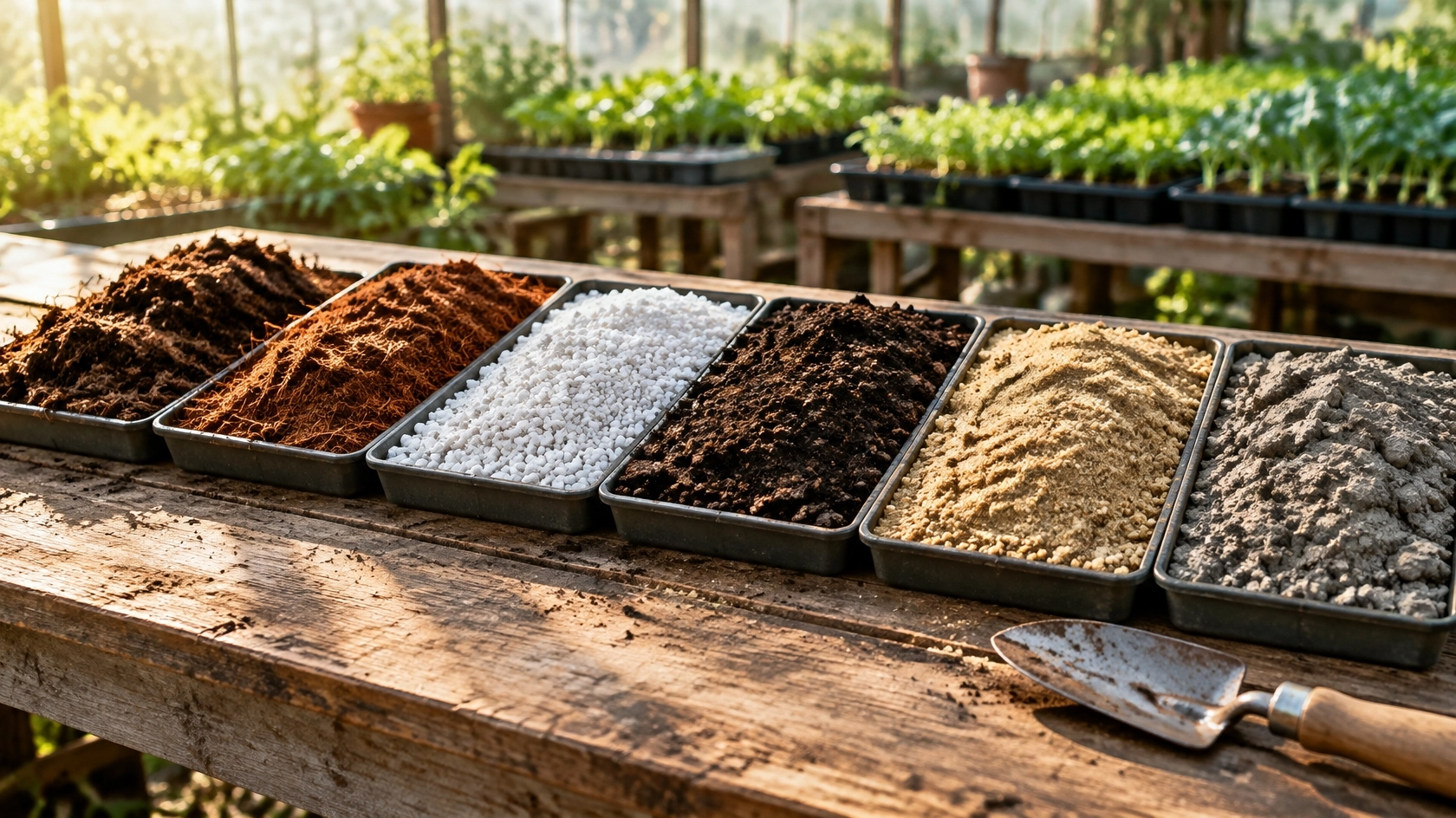
- Substrate options: Systems include coco coir grow bags, perlite, rockwool slabs and peat-based mixes, each suited to different crops and irrigation methods.
Choosing the Best Growing Media for Your Greenhouse Crops
The best growing media for a greenhouse depends on the crop. Professional growers increasingly rely on crop-specific formulations rather than general-purpose substrates.
Vegetables and Herbs
Tomatoes are the dominant greenhouse vegetable, accounting for roughly 36% of total greenhouse area. Coir supports higher fruit yield and nutrient uptake than rockwool in head-to-head trials, and soilless CEA hydroponics yields for tomatoes reach 16.30 tons per acre versus 4.50 tons per acre in soil-based farming, per Science in Hydroponics.
For herbs and leafy crops, coco peat produced approximately 40% higher leaf biomass than perlite in controlled greenhouse studies. Hydroponic lettuce yields 9.50 tons per acre versus 4.00 tons per acre in soil, with a cycle time of just 30 to 45 days. Potatoes grown in containers benefit from loamy or amended peat-based mixes that support tuber development without waterlogging.
Ornamentals and Flowering Crops
Ornamental and flowering crops have precise pH and drainage requirements that natural soil types rarely meet without amendment. Most flowering greenhouse crops perform best in a well-drained, peat-based or coir-based growing media with pH held between 5.5 and 6.2.
According to Greenhouse Management, 57% of growers acquired standard pre-made mixes in 2025, up from 37% in 2023, with performance, availability and consistency ranked above cost as the top selection criteria. Crop-specific formulations have achieved market adoption at 15 to 20% price premiums over standard products, reflecting grower recognition of yield and quality improvements.
Conclusion
Matching growing media to crop type and production system is one of the most direct levers a greenhouse operator controls. Natural soil types each carry distinct strengths and limitations, and understanding those differences is the foundation of sound media management.
For professional growers, the path forward typically combines soil type identification, targeted amendment and a willingness to move to soilless systems when the crop demands it. Science-driven growing media selection, backed by regular testing and crop-specific formulations, consistently delivers stronger results than general-purpose approaches.
Frequently Asked Questions
How much does professional greenhouse growing media cost in the United States?
Growing media costs in the United States vary significantly by substrate type and volume. Standard peat-based mixes typically run lower per cubic foot than crop-specific formulations, which command 15 to 20% price premiums. Commercial growers purchasing in bulk often negotiate volume pricing through regional distributors. Performance, availability and consistency consistently outrank cost as the top selection criteria among growers spending the most on substrate.
Which soil types perform best for greenhouse production in the United States?
Loamy soil is the benchmark for greenhouse production across the United States, offering balanced drainage, moisture retention and fertility. However, most large-scale commercial operations in the U.S. have moved beyond native soil types entirely. In high-tech greenhouse complexes, 95% of tomatoes are grown on soilless substrates, with coco coir and perlite-based systems dominating intensive vegetable production.
What is cation exchange capacity and why does it matter for greenhouse media?
Cation exchange capacity (CEC) measures a substrate’s ability to hold positively charged nutrients including calcium, magnesium and potassium. For greenhouse substrates, a CEC of at least 6 to 15 meq/100cc is recommended. Canadian sphagnum peat moss delivers a very high CEC of 100 to 200 meq/100g, making it an effective nutrient buffer. Perlite, by contrast, has a CEC of just 1 to 5 meq/100g and functions as a near-inert drainage amendment.
How does peat moss compare to coco coir as a greenhouse substrate?
Peat moss holds up to 20 times its weight in water and offers outstanding nutrient buffering, but its acidic pH of 3.5 to 4.5 requires lime adjustment. Coco coir holds 8 to 10 times its weight in water, has a near-neutral pH of 5.5 to 6.8 and is reusable for 2 to 3 seasons. Peat’s CEC of 150 to 250 meq/100g outperforms coir’s 60 to 130 meq/100g for nutrient retention, per Greenhouse Management.
How do I get started testing and improving my greenhouse growing media?
Start with a laboratory media test to establish baseline pH and electrical conductivity. The target pH for soilless media is 5.8 to 6.2, and for soil-containing mixes, 6.0 to 6.6. Plan for monthly testing at minimum, and weekly in-house pH checks for commercial operations. For short-season crops, identify problems before planting since correcting a deficiency or toxicity in greenhouse media can take 2 to 4 weeks. Contact your Sun Gro representative to find the right mix for your crop.