
Make some more airspace perlite, there’s a new aggregate in town. For the past several decades, perlite, has been the most common aggregate in potting mixes. With good reason too. It has been proven and relied upon for consistently creating drainage and air space without chemically altering the mix; highly supporting the proverbial saying: “If it ain’t broke, don’t fix it”.
Well, it may not be broken from a grower perspective, but can it be improved on…? In my opinion (and others at Sun Gro), yes. What aspects of perlite could be improved?
- environmental impact
- long term availability
- particle size consistency
- durability
- aesthetics
- chemical and physical properties
How do we know these can be improved? The biochar aggregate designed by Sun Gro, trademarked Black Bear® improves on all these aspects.
What is biochar?
Biochar is an organic based material that has undergone pyrolysis (high temperature, low oxygen) to create a highly stable, charcoal-like material that stores carbon for hundreds to thousands of years. Pyrolysis is the process of heating biomass (to 450 – 900 °C) in the absence (or under reduction) of oxygen.
Biochar is commonly made from biomass by-products, such as agriculture residues, paper mill waste, wood, manure, or other organic waste material. This is referred to as feedstock.
During pyrolysis, the feedstock is converted into gas, solids and sometimes liquids. The liquids and gases can be converted into fuel and other saleable chemicals. The remaining solid material is a carbon-rich, carbonized fraction of the original feedstock, which we refer to as biochar. According to AAPFCO (Association of American Plant Food Control Officials), the finished material must consist of at least 60% carbon to be called biochar.
Biochar is like charcoal, but it is designed to be used in agriculture or horticulture applications. Barbecue charcoal is made to burn and release its carbon. Biochar is made with the opposite goal – to keep that carbon stable and store it for the long term. Biochar is produced under controlled high temperature, and limited-oxygen conditions, creating a carbon-rich material with a high proportion of stable carbon that can support long-term carbon sequestration (storage). Its porous structure and high surface area can also improve water and nutrient retention and provide habitat for beneficial microorganisms.
Biochar varies a lot by the company producing it. The feedstock, mechanical process, pyrolysis process, and storage all play a role in the final quality of the biochar and affect how good of an aggregate it is for growing plants.
Why are we only considering biochar now?
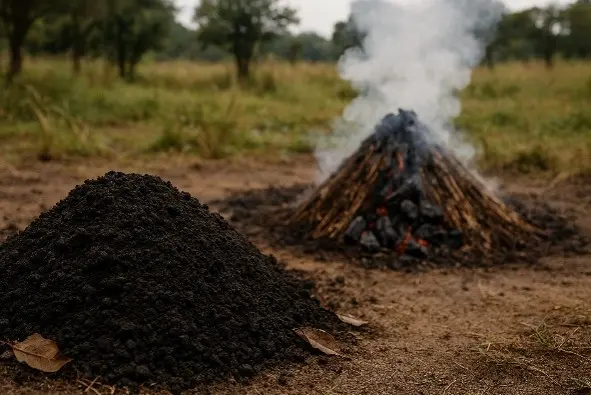
Some of you may have heard of biochar before. It has actually been around for thousands of years, first theorized to have been used 2500 years ago in the Amazon Basin of South America. Ancient cultures would create biochar through primitive techniques and then mix the biochar in with the native soil to improve crops and allow agriculture in unproductive areas. This highly fertile soil can still be found today and is called “Terra Preta”. Since these ancient beginnings, biochar has been used in agricultural soils throughout the world to improve organic matter, carbon sequestration, nutrient retention and overall soil structure.
While common in agriculture it was less used in horticulture. Primarily because perlite was working and there were less concerns over long term supply and the sustainability associated with growing media components. The other reason biochar was not widely used in horticulture was the variation in biochar. Scientists have trialed biochar for horticulture practices over the years but found very mixed results – which they attributed to widely variable quality in the biochar. Black Bear® can overcome these challenges by identifying a particle size, manufacturing process and feedstock that can be produced at scale and create a biochar that has the optimal properties to act as an aggregate in growing media.
What is the long-term supply of biochar?
In 2023 the global production of biochar was estimated to be at least 350,000 metric tons (772 million lbs)4. With biochar typically having a bulk density of between 5.6 and 15.6 lb/ft3 an estimated 137 to 50 million cubic feet of biochar is produced annually. Now, not all of that biochar is suitable for horticulture purposes, however, we are only considering biochar as an aggregate – making up between 5 – 30% of a mix volumetrically. In comparison, about 400 million cubic feet of peat moss is extracted annually, and peat moss is by far the most highly used substrate typically making up 95-60% of a mix. Unlike perlite, biochar sources are growing and have limited competing uses allowing for a more reliable supply. Since producers of biochar produce more than just physical biochar (also carbon credits, energy and produce chemicals), there are more and more local biochar producers popping up across the globe without much restriction on geographical location. In summary, future biochar supply is looking promising to keep up with more horticulture use.
What is Black Bear® and how is it different?
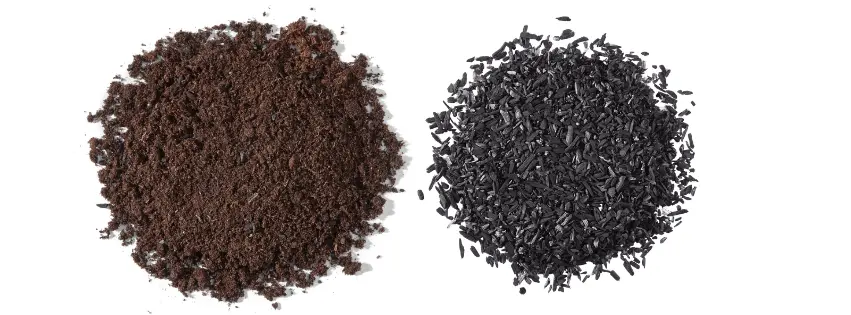
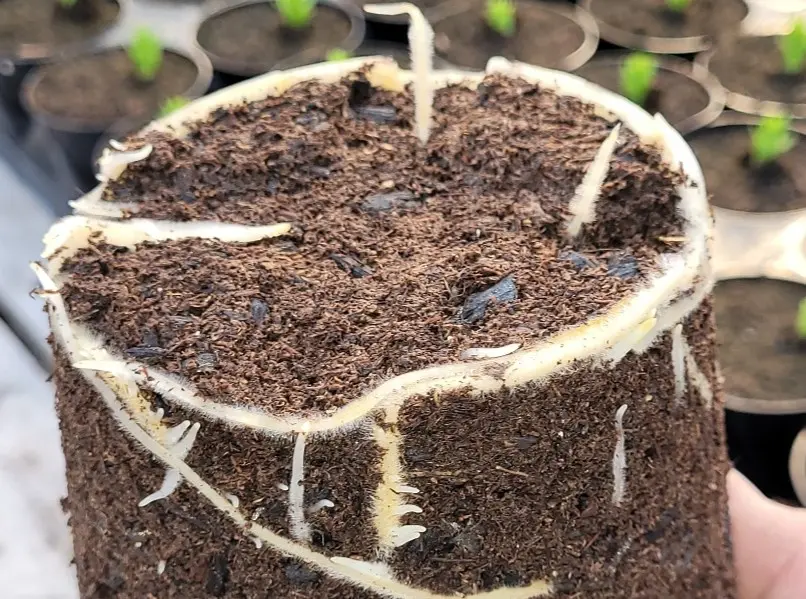
Black Bear® is a biochar unique to Sun Gro that is engineered specifically to be used as an aggregate in commercial growing media. This means the particle size range is extremely consistent, coarse, and designed for optimal water holding and air space characteristics that in some cases outperform perlite. The feedstock and process used to create Black Bear® creates a biochar with a rough surface texture. This rough surface texture acts like structural interlock in the growing media. This allows Black Bear® particles to remain more stationary in the pot, creating long-lasting pore space and a more consistent rootzone environment over the long run. Perlite tends to float or shift during overhead irrigation, causing an inconsistent rootzone over time and a messy and unaesthetic accumulation of perlite at the top of the pot. This is avoided with Black Bear® growing media.
How does Black Bear® compare physically and chemically to perlite?
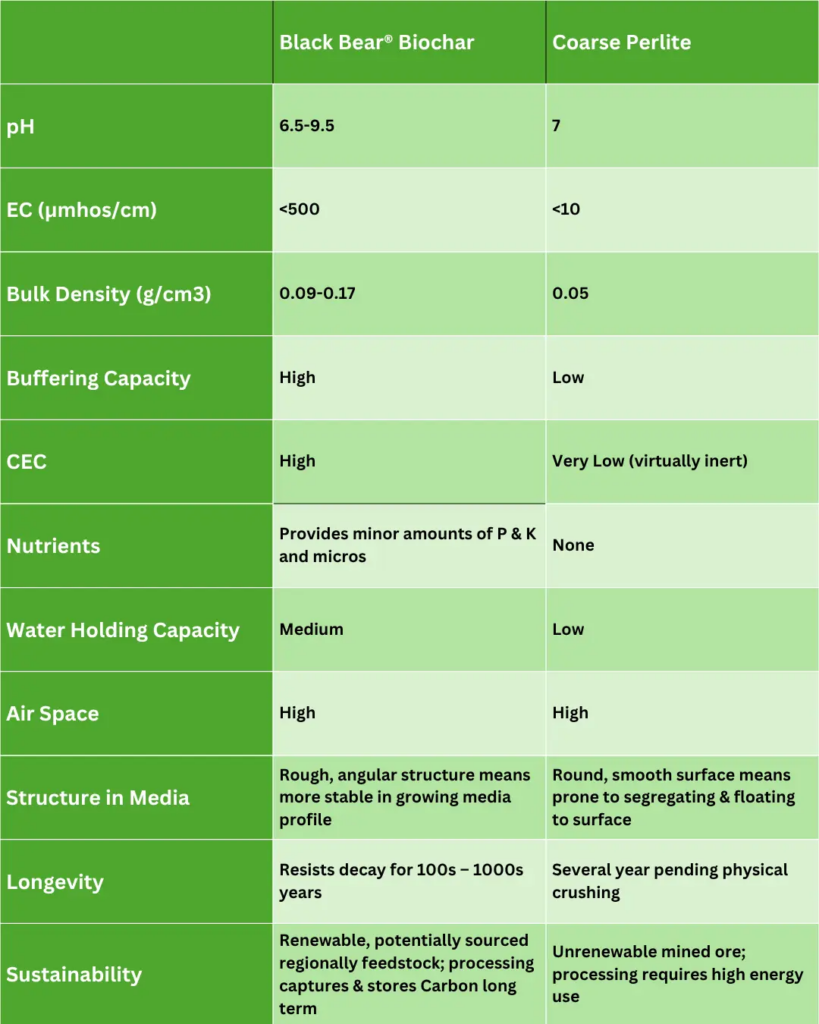
Biochar has a more basic pH (8.5 – 9.5) compared to perlite which has a neutral pH (7.0). As a result, the lime rates in biochar mixes need to be potentially adjusted. Once balanced in a mix, biochar offers greater pH buffering capacity compared to perlite mixes. This reduces pH swings in the rootzone throughout growth.
In addition to increased pH buffering capacity, Black Bear has greater nutrient retention capacity including a cation exchange capacity (CEC) compared to perlite. Perlite holds minimal, if any, nutrients and has no ability to exchange cations in the growing media. Biochar, due to its greater surface area and geometry, can hold onto nutrients and release them as needed in the rootzone. This creates an additional pool of reserve nutrients available for plant uptake that would not be available in perlite. This has been demonstrated in growing media for container production in multiple scientific studies1,2.
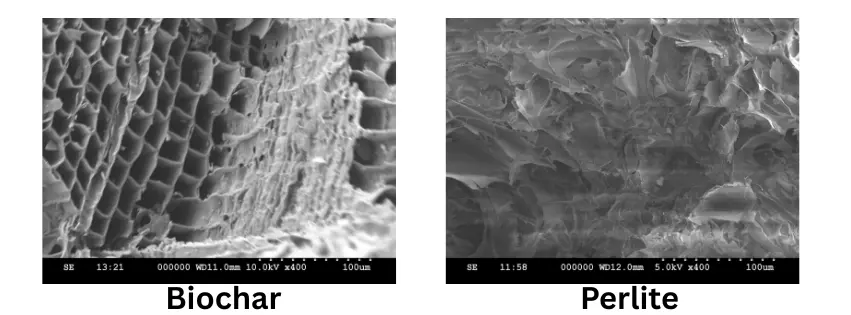
Physically, Black Bear® has similar benefits of coarse perlite. Perlite is typically added to mixes to increase the air space and drainage of the mix. The very consistent medium to coarse particle size of Black Bear® promotes air space and drainage and the high surface area of the unique internal honeycomb structure (as illustrated in Fig. 1) allows for increased water and nutrient holding capacity of the mix. There has been evidence to suggest biochar’s greater surface area also enhances beneficial microbial growth when applied in agriculture soils3. This has not been explored in soilless growing media yet but is an interesting topic, worthy of investigation.
Both have relatively low bulk density meaning they are light and do not compress the mix over time. Biochar is also not available for microbes to break down; at least in our lifetimes. This gives it an advantage over other organic material like peat, bark, and wood fiber which decompose to some degree over most periods of plant growth. Decomposition and shrinkage of materials cause pores to collapse, limiting airspace and water holding capacity.
How is Black Bear created? What are the environmental impacts of Black Bear® vs. perlite?
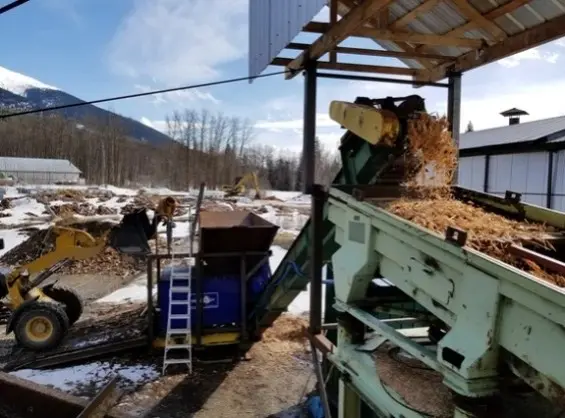
Black Bear® is produced from sawmill and forestry residues which is a renewable stream typically burned for energy or landfilled. These residues undergo high-heat (600–900°C) under slow pyrolysis. Slow pyrolysis at high temperature fixes more carbon into the solid phase instead of losing it as gas. This creates a very carbon rich, weed-free, pathogen-free biochar. A critical metric, the hydrogen/carbon ratio, consistently falls below 0.4, indicating that roughly 75% of the carbon will persist for more than 1,000 years. It is these technical details that truly makes Black Bear® a climate-conscious growing media. This process effectively captures and stores carbon for hundreds (potentially thousands) of years and allows our partner company to produce and sell carbon credits to companies that wish to be carbon neutral or even carbon negative. Wait a minute, earlier you said you need to get up to 600 – 900 °C in order to achieve pyrolysis. Doesn’t that take a lot of energy to sustain that temperature? At first, yes fuel is needed to start the pyrolysis process at a high temperature, however, once started, the organic feedstock acts as the fuel source and sustains the high temperature with no additional fuel input. This can actually generate energy or useable heat. In comparison, to pop perlite ore, furnaces need constant fuel to maintain temperatures above 1000 °C.
So how does perlite stack up?
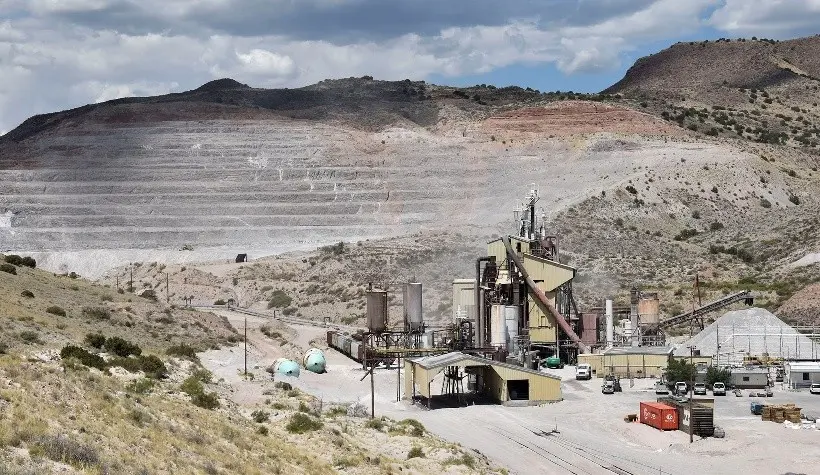
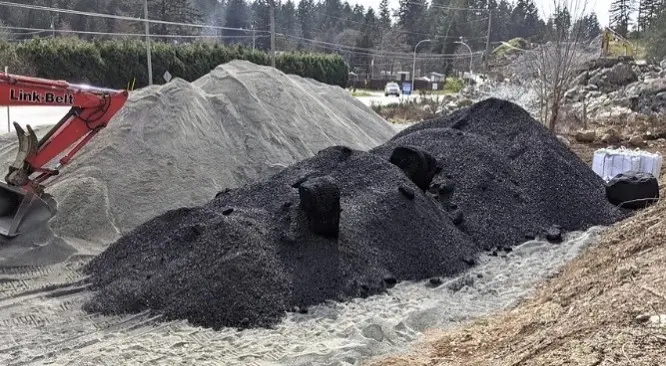
Perlite is a mined ore. This means that in order to produce perlite, the environment it is sourced from is highly altered (for example see Fig. 2). Also, since it is a mined ore, it is non-renewable and energy intensive to produce. Perlite also has competing uses/consumers. Perlite is commonly used in the construction industry in concrete and insulation. As a result, the price of perlite is susceptible to fluctuations from the market.
Some perlite mines are also offered overseas in Greece, adding on the additional carbon and cost needed to deliver the ore to North America. Whereas biochar can be made just about anywhere consistent biomass is available.
How do plants compare in Black Bear mixes vs. perlite mixes?
Following an extensive Sun Gro research and development program that established the major Black Bear® product lines, as the time of writing this article, more than 150 commercial grower trials were conducted across a wide range of plant species, including but not limited to: chrysanthemums, poinsettias, standard bedding plants, nursery liners, hydrangeas, easter lilies, geraniums, tropicals, succulents, ferns, vegetables, herbs (basil), forestry seedlings and grasses.
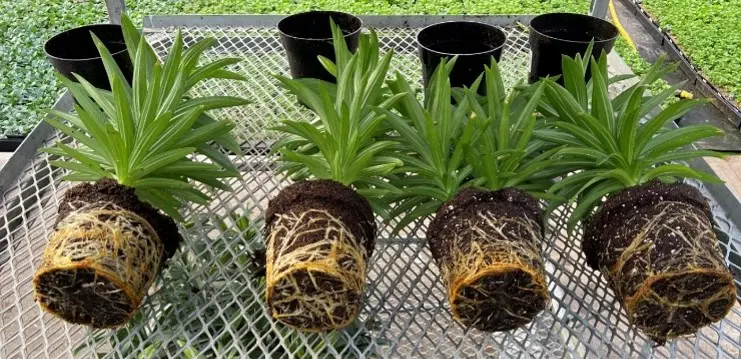
Fig. 3 Easter lilies grown in Black Bear #15 (left) and Sunshine Mix #15 (right).
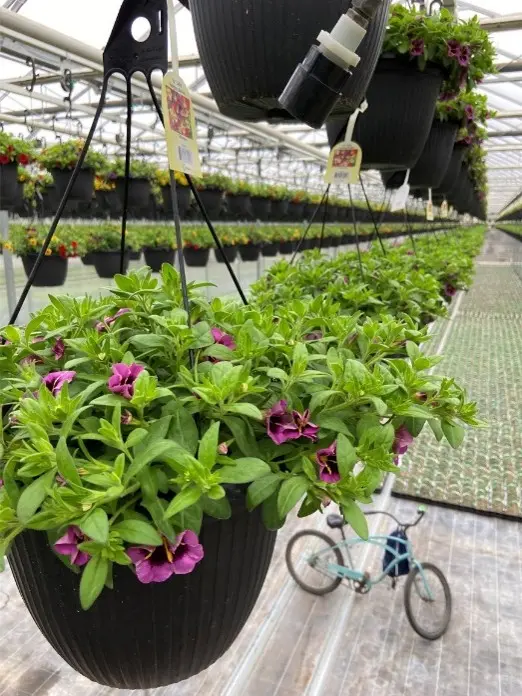
Fig. 4 Calibrachoa grown in Black Bear #15 (right) and comparable peat-perlite mix (left).
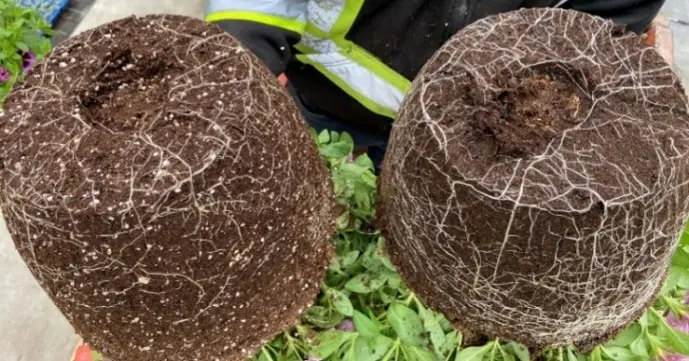
A reoccurring result is improved root health in the Black Bear mixes vs. standard perlite mixes. Thicker, whiter roots with more active growing tips evenly distributed throughout the growing media was a common observation (Fig 3 & 4). Overall plant growth and quality is on par with other standard peat perlite and peat perlite bark mixes. In some cases, plants grown in Black Bear flowered or reached their growth target earlier. No changes in fertility were needed when comparing mixes with similar perlite percentages. Irrigation practices were either the same or needed to be slightly reduced in Black Bear mixes as the biochar for some growers seemed to hold slightly more water.
While these are only commercial trials, there have been many scientific studies also demonstrating the same growth if not improved for various biochar across several plant species2,4,5,6. Of course, these come with the caveat that no biochar is the same.
So far Black Bear® mixes are available for growing on crops, however, there is great potential for a biochar propagation mix. While Black Bear has not been trialed in the nursery space yet, there has been a study showing promising results using biochar up to 25% in citrus production7.
Do Black Bear® mixes cost more?
No. Black Bear® mixes are priced the same as Sun Gro’s standard perlite mix equivalents in most regions.
Other biochar mixes or products typically cost more. Sun Gro has partnered with leaders in the biochar industry that produce at a scale and efficiency that allows us to sell Black Bear® competitively. Having a sustainable growing media doesn’t just mean it’s good for the environment, it has to be financially sustainable for the grower too, which is exactly what Black Bear® is intended to do.
The world is changing, and creating products that are produced with both the environment and economic sustainability in mind is not going away. Whether it is for marketing purposes, company or grower philosophy, or just a technically great aggregate to grow in, Black Bear® mixes offers an innovative solution in the growing media space.
Brandon Yep, Grower Specialist, Canada

Got questions? Feel free to reach out to me at [email protected]
References
- Altland, J. E., & Locke, J. C. (2012). Biochar Affects Macronutrient Leaching from a Soilless Substrate. HORTSCIENCE, 47(8), 1136–1140.
- Nemati, M. R. et al. (2015). Potential Use of Biochar in Growing Media. Vadose Zone Journal, 14(11).
- Ayaz, M., Feiziene, D., Tilvikiene, V., Akhtar, K., Stupinaite, U., & Iqbal R. (2021). Biochar Role in the Sustainability of Agriculture and Environment. Sustainability 13(1330): 1-22. https://doi.org/10.3390/su13031330
- Veazie, P., Balance, M. S., Whipker, B. E., & Jeong, K. Y. (2023). Comparison of Peat–Perlite-based and Peat–Biochar-based Substrates with Varying Rates of Calcium Silicate on Growth and Cannabinoid Production of Cannabis sativa ‘BaOx’. HortScience, 58(10), 1250–1256. https://doi.org/10.21273/HORTSCI17324-23
- Simiele, M., Argentino, O., Baronti, S., Scippa, G. S., Chiatante, D., Terzaghi, M., & Montagnoli, A. (2022). Biochar Enhances Plant Growth, Fruit Yield, and Antioxidant Content of Cherry Tomato (Solanum lycopersicum L.) in a Soilless Substrate. Agriculture, 12(8), 1135. https://doi.org/10.3390/agriculture12081135
- Chrysargyris, Antonios & Prasad, Munoo & Kavanagh, Anna & Tzortzakis, Nikos. (2019). Biochar Type and Ratio as a Peat Additive/Partial Peat Replacement in Growing Media for Cabbage Seedling Production. Agronomy, 9(69), 10.3390/agronomy9110693.
- Ferlito, F. et al. (2020). Evaluation of Conifer Wood Biochar as Growing Media Component for Citrus Nursery. Applied Sciences, 10(5), 1618.
- US Biochar Initiative (USBI) and International Biochar Initiative (IBI). (2023). Global Biochar Market Report.