
Discovering white mold growth on your freshly opened bale of growing media can be unsightly and concerning. But have no fear, these molds can actually be a good sign!
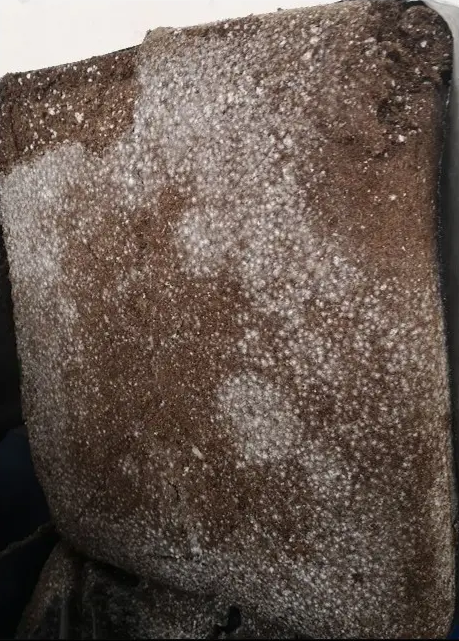
The gray/white/brown growth found on the inside of the bag and outside layer of growing media is typically identified as saprophytic molds. A saprophyte is defined as: “an organism, especially a fungus or bacterium that obtains food from dead or decaying organic matter”. While the appearance of these molds may cause concern, they are harmless to plants and people. Not only do these molds have no negative effects on plant growth, but many species are beneficial to plants. For example, common saprophytes found in packaged peat-based growing media include: Trichoderma sp., and Penicillium sp. which have been shown to reduce pathogenic bacteria and root diseases while simultaneously breaking down organic matter and releasing mineral nutrients.
The spectrum of plant and microbial species in a Sphagnum peat bog is very limited and thus the associated plant diseases one might find in peat-based growing media is minimal compared to what is typically found in mineral soils. Furthermore, the microbial species that are present in peat bogs are mostly beneficial microbes that help reduce disease causing organisms, by outcompeting them for resources. Sterilization unfortunately kills the good microbes along with the bad and creates an opportunity for the bad microbes to take over if given a chance. This is why peat products are not sterilized, nor do they need to be.
Peat moss comes from a plant that was once living (and therefore organic) that has died and is slowly decomposing. In Sphagnum peat bogs, the saprophyte feeds on the peat (or decaying organic matter) and survives in very low populations on the bog due to the lack of nutrients and low pH conditions. However, when growing media mixes are made, nutrients and lime are added to the peat, creating a more favorable environment for the saprophytes to grow in. Once the mix is bagged, the conditions become even more favorable for growth as moisture becomes trapped in the bag. During storage, especially during warmer months of the year, moisture accumulates along the lining of the bag. This warm, moist environment offers ideal conditions for these saprophytes, which is why they are often observed along the external edges of compressed growing media bales.
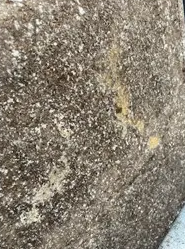
When the bag is opened the saprophytic mold typically dissipates after a few days and does not return. They may dissipate sooner if the growing media is fluffed/loosened and exposed to drier air. Using the mix immediately is also fine, as long as good irrigation practices are used to ensure the growing media is allowed to dry down sufficiently to prevent persistent saprophyte growth. It is a combination of air exposure and reduction in moisture that causes saprophytic molds to dissipate.
In some rare scenarios where the growing media is kept under very moist/humid conditions, the mold may persist during crop production. While still harmless to the plant, these molds can accumulate at the top of the growing media and reduce water and air infiltration into the growing media. If this occurs, it is recommended to reduce watering so that the top layer of growing media is allowed to sufficiently dry; reduce humidity; increase airflow; and in extreme cases, apply a fungicide.
Brandon Yep, Grower Specialist, Canada

Got questions? Feel free to reach out to me at [email protected]